
30. Juli 2024
Zum Tod der portugiesischen Sängerin und Fado-Interpretin Mísia
Die am 18. Juni 1955 in Porto als Susana Maria Alfonso de Aguiar geborene portugiesische Sängerin und Fado-Interpretin Mísia (Bild) ist am 27. Juli 2024 in Lissabon gestorben. Sie interpretierte traditionellen Fado mit neuer Instrumentierung, anderen Vertonungen und zeitgenössischen Texten. Autoren texteten für sie, wie etwa der Literaturnobelpreisträger José Saramago, Lídia Jorge oder Vasco Graça Moura. Ihr Gesang wurde nicht ausschliesslich von der portugiesischen Gitarre (Guitarra Portuguesa) getragen, sondern auch von anderen Instrumenten begleitet. So benutzte sie neben den klassischen Fado-Instrumenten Gitarre (Viola do Fado), portugiesische Gitarre und akustischem Bass (Viola Baixo) für den Fado eher ungewöhnliche Instrumente wie Geige, Akkordeon und Klavier. Auf vielen Tourneen u.a. nach Asien, Nord- und Südamerika sowie durch Europa wurde auch ausserhalb Portugals ein internationales Publikum auf Mísia und ihren Fado aufmerksam. (*)
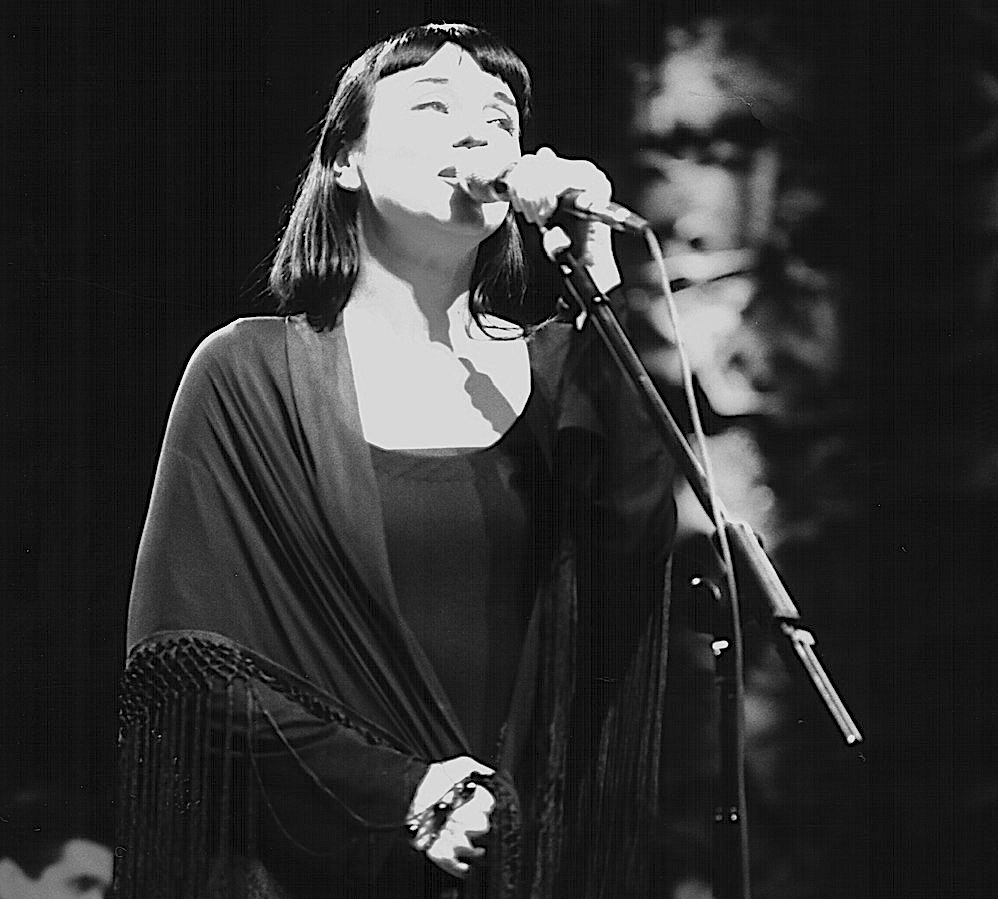
Bild: Mísia, 2005 – Foto: Axel Hartmann, https://www.flickr.com/people/74708580@N00 (Ausschnitt) – Lizenz: https://creativecommons.org/licenses/by-sa/2.0/deed.en – Datei: https://commons.wikimedia.org/wiki/File:Misia-01.jpg
Mísia (1955-2024), a voz corajosa de aquém e além-fado
Correu os palcos do mundo e deixou a sua marca e o nome de Portugal por vários países. Mísia, cantora e fadista, morreu este sábado em Lisboa. Tinha 69 anos. (…)
A notícia foi dada por Richard Zimler, escritor americano há muito radicado em Portugal, nas redes sociais. «Estou desolado, pois a minha velha amiga, a cantora Mísia, acabou de nos deixar. Partiu em paz, docemente, sem dores.» Assim foram também avisados os amigos da sua morte. Mísia encontrava-se internada há pouco mais de uma semana no Hospital de Santa Maria, em Lisboa, na sequência de mais uma crise relacionada com a longa batalha que desde 2016 travava contra o cancro. Uma batalha com intermitências, com momentos de esperança à mistura com outros dolorosíssimos, que até ao final nunca lhe tiraram a vontade de viver.
Se já é assinante do jornal PÚBLICO, saiba que tem direito a oferecer até 6 artigos exclusivos por mês a amigos ou familiares, usando a opção «Oferecer artigo» no topo da página. É tão simples e é outra forma de contribuir para a vida democrática do país.
Todos os conteúdos do PÚBLICO são protegidos por Direitos de Autor ao abrigo da legislação portuguesa, conforme os Termos e Condições.
Nuno Pacheco
https://www.publico.pt/2024/07/27/culturaipsilon/noticia/morreu-cantora-fadista-misia-2099048
Morreu a fadista Mísia
Susana Maria Alfonso de Aguiar, cantora portuguesa conhecida pelo nome artístico Mísia, morreu este sábado aos 69 anos. A informação foi divulgada pelo escritor e amigo da cantora Richard Zimler no Facebook. A cantora tinha completado os 69 anos no mês passado.
«Estou desolado, pois a minha velha amiga, a cantora Mísia, acabou de nos deixar. Partiu em paz, docemente, sem dores. Gostei tanto dela. Aqui está ela a cantar usando o xaile que lhe fiz», escreveu o escritor.
Vencedora de inúmeros prémios, Mísia é considerada uma das melhores fadistas dos últimos tempos, representava a terceira geração de artistas da família.
https://www.cmjornal.pt/cultura/detalhe/morreu-a-cantora-portuguesa-misia
Morreu a cantora Mísia
A ministra da Cultura, Dalila Rodrigues, diz ter recebido a notícia «com profundo pesar».
«Com uma vasta carreira, Misia foi uma voz fundamental na renovação do fado, sem receio de experimentar novas sonoridades e abordagens menos convencionais», afirmou numa nota enviada às redações.
A ministra destaca que Mísia «granjeou o reconhecimento dos seus pares» e acrescenta que a cantora deixa «uma vasta lista de colaborações com músicos de todo o mundo, que demonstra a sua versatilidade e o seu talento».
https://www.rtp.pt/noticias/cultura/morreu-a-cantora-misia_n1589136
Influential Fado Innovator Mísia Dies at 69
The Portuguese Minister of Culture, Dalila Rodrigues, released a statement indicating that Mísia «was a fundamental voice in the renewal of fado.» She added: «With a vast career, Mísia was a fundamental voice in the renewal of fado, unafraid to experiment with new sounds and less conventional approaches», she stated, referring that «she earned the recognition of her peers».
«She leaves us with a vast list of collaborations with musicians from all over the world, which demonstrates her versatility and talent.»
https://worldmusiccentral.org/2024/07/29/influential-fado-innovator-misia-dies-at-69/
Mísia, queen and anarchist of fado, dies at 69
The singer, with over 30 years of career, has been a fundamental voice in the renewal of fado.
Susana Maria Alfonso de Aguiar, known as Mísia, liked to say that the word fado comes from Latin, fatum, destiny, and that is why the Portuguese song is not danced, unlike familiar genres like tango or flamenco. Fado, according to Mísia, meant «the acceptance of destiny,» and that imposes stillness. Misia (Oporto, 1955) has just passed away in Lisbon after eight years of illness, and Portugal bids her farewell as a singer of her time and, at the same time, as a wise woman capable of expressing the inexpressible.
Luis Alemany
https://www.mundoamerica.com/entertainment/2024/07/29/66a7596ce85ece6a2a8b457e.html
Muere Mísia, la artista que sacó el fado de sus casillas
La cantante portuguesa, fallecida este sábado a los 69 años, logró un gran éxito internacional con su renovación del género pese al desdén que sufrió durante años en su país.
Tereixa Constenla
https://elpais.com/cultura/2024-07-28/muere-misia-la-artista-que-saco-el-fado-de-sus-casillas.html
Lutto nella musica portoghese, si è spenta la cantante Mísia (Susana Maria Alfonso de Aguiar), tra le principali interpreti del Novo Fado. Aveva 69 anni ed era malata da tempo. Il suo ultimo disco, Animal Sentimental, è del 2022.
Celebre la sua partecipazione al film «Passione», di John Turturro, nel quale duetta con Peppe Servillo in brani tipici della napoletanità.
https://www.napolitoday.it/cultura/morta-misia-passione-turturro.html
La mort de la chanteuse portugaise Misia
L’artiste avait participé au renouveau du fado, genre emblématique du Portugal, tout en s’autorisant de lumineuses digressions.
Son décès a été annoncé par la ministre de la culture du gouvernement portugais, Dalila Rodrigues, qui a salué «une voix fondamentale dans le renouveau du fado». A l’instar de Mariza, d’Ana Moura, de Cristina Branco ou de Lina, Misia s’appliquait effectivement à en renouveler le genre. Elle chantait magnifiquement le fado, mais elle s’autorisait aussi des digressions. Sa voix intense se glissait à merveille dans le vocabulaire émotionnel du genre, qu’avait magnifié et porté dans le monde l’iconique Amalia Rodrigues (1920-1999).
Patrick Labesse
Ohne sie wäre der Fado nicht, was er heute ist: Die portugiesische Musikerin Misia ist tot. In ihrem Heimatland ist die Trauer gross.
Misias Tod erregte in ihrer Heimat große Anteilnahme. Präsident Marcelo Rebelo de Sousa würdigte sie als eine «leidenschaftliche» Fado-Sängerin, die «an der Schnittstelle anderer Musikstile» gewirkt habe. Das portugiesische Kulturministerium erklärte: «Misia hat eine Schlüsselrolle in der Erneuerung des Fado gespielt und sich nicht gescheut, mit neuen Klängen und weniger konventionellen Herangehensweisen zu experimentieren.»
afp
https://www.faz.net/aktuell/feuilleton/fado-saengerin-misia-gestorben-19887135.html
Audio / Videos:
Diverses:
https://www.youtube.com/@misiafado
MISIA – Lagrima, 1994
https://www.youtube.com/watch?v=rcqHWfA1BuI
Mísia – Live (Lincoln Center NYC), 2004
https://www.youtube.com/watch?v=7Ln9F2Bc3Jk&t=9s
MISIA – Lisboarium (Concert), 2009
https://www.youtube.com/watch?v=7yrsweJdv-I&t=14s
MISIA – Indifferentemente (John Turturro’s Film Passione)
https://www.youtube.com/watch?v=k6qrlHKRI9s
Misia – Ese Momento (Clip), 2008
https://www.youtube.com/watch?v=GkoC4MZfGhA
MISIA – Interview (RFI), 2011
https://www.youtube.com/watch?v=86MZ8g149DE&t=3s
Mísia – EPK Delikatessen Café Concerto (Version Française), 2013
https://www.youtube.com/watch?v=fdSGXis-GCE
Mísia – La Chanson d´Hélène Ft. Iggy Pop (Video Clip), 2013
https://www.youtube.com/watch?v=ia-YbhCw7d4
Mísia – É doce morrer no mar – de Dorival Caymmi (excerto), 2014
https://www.youtube.com/watch?v=jbQIDATPULs
Mísia – Ciclo de Fado | Centro Cultural Kirchner, 2015
https://www.youtube.com/watch?v=5v1THLlRG5I
Mísia – Animal Sentimental – EPK subtitulado en castellano
https://www.youtube.com/watch?v=vZf8URv99as
Mísia | Da Vida Quero Os Sinais, 2022
https://www.youtube.com/watch?v=6Ltd6NtNbyU&t=1s
Mehr:
https://www.facebook.com/photo/?fbid=10233941901953216&set=a.10217058029146948
https://www.discogs.com/de/artist/1478270
https://portuguesecharts.com/showinterpret.asp?interpret=Misia
https://portugalmusic.co.uk/misia
https://d.jornaldocomercio.com/noticia_old.php?codn=7878
https://web.archive.org/web/20071005130301/http://www.einseitig.info/html/content.php?txtid=569
https://web.archive.org/web/20100122094331/http://www.arte.tv/de/Misias-Fado/404746,CmC=363788.html
https://www.nytimes.com/2002/07/07/arts/music-drawing-tears-in-any-language.html
https://pt.wikipedia.org/wiki/Mísia_(cantora)
(*) https://de.wikipedia.org/wiki/Mísia
#Misia #Mísia #SusanaMariaAlfonsodeAguiar #Fado #CHcultura @CHculturaCH ∆cultura cultura+







Kommentare von Daniel Leutenegger