Der am 23. September 1928 in Palmira (Mendoza, Argentinien) geborene argentinische Künstler Julio Le Parc (Bild) ist am 30. Mai 2026 in Paris gestorben. Er war ein berühmter pionierhafter Kinetischer Künstler und bekannter Vertreter der Op-Art. Julio Le Parc gehörte neben François Morellet, Horacio Garcia Rossi, Francisco Sobrino, Joël Stein und Yvaral im Jahr 1960 zu den Mitbegründern der Künstlergruppe Groupe de Recherche d’Art Visuel (GRAV). Er besuchte die Escuela de Bellas Artes de Buenos Aires. Im Jahr 1958 ging er nach Paris. Er arbeitete dort im Atelier von Victor Vasarely. Julio Le Parc schuf vor allem lichtkinetische Objekte und Mobiles mit Lichtreflektoren. Sein Ziel war es, visuelle Phänomene durch Experimente anschaulich zu machen. Neue Technologien sollten eingesetzt werden, um das Verhältnis von Licht und Bewegung auf eine innovative Art und Weise darzustellen. Die Betrachtenden sollten durch Elemente, die in seinen Objekten manipuliert und beliebig bewegt werden konnten, zu aktiver Mitarbeit angeregt werden. (*)
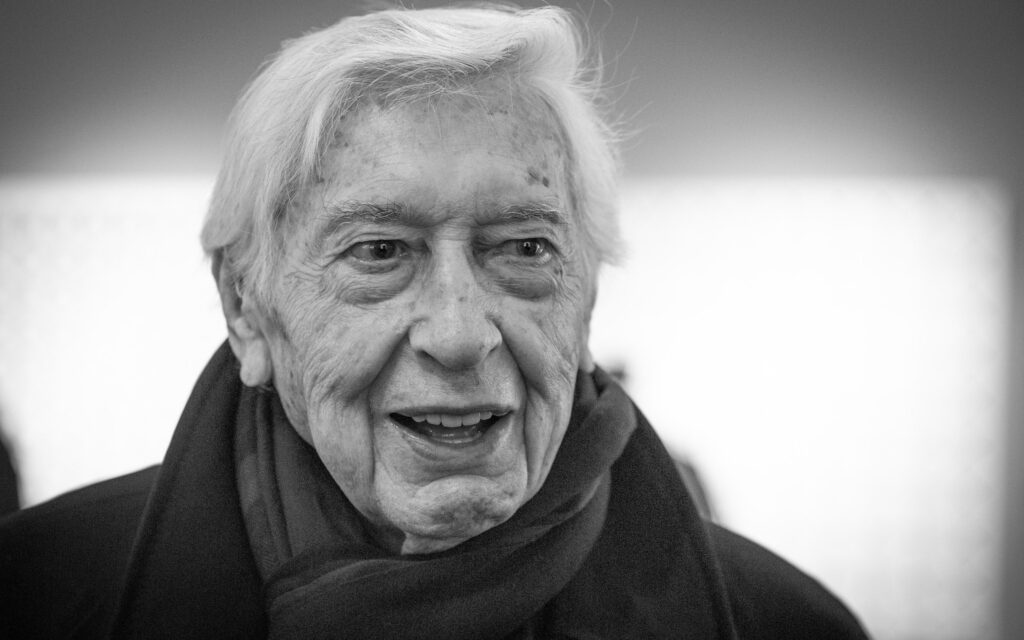
Bild: Julio Le Parc, 2019 – Foto: Kaloian / Secretaría de Cultura de La Nación, https://www.flickr.com/photos/culturaargentina/48590085576/ – Lizenz: https://creativecommons.org/licenses/by-sa/2.0/deed.en – Datei: https://commons.wikimedia.org/wiki/File:Julio_Le_Parc_en_el_Museo_Nacional_de_Bellas_Artes_-_48590085576.jpg
A los 97 años murió Julio Le Parc, el maestro de la luz, el color, la interacción y el movimiento
Pionero del arte óptico y cinético, uno de los artistas argentinos más reconocidos en el mundo falleció en París, donde se radicó en 1958; siempre optimista, proponía rebelarse contra el orden establecido
“Optimismo siempre”, decía la frase con la que concluía el video que difundió en plena cuarentena, en 2020. La filmación mostraba a Julio Le Parc trabajando, limpiando y cocinando en su casa-estudio de Cachan, en las afueras de París. La misma donde vivió desde 1958 hasta su muerte ocurrida hoy, a los 97 años, como consecuencia de un progresivo deterioro de su salud que lo obligó en los últimos años a resignar sus viajes por el mundo. El próximo 11 de junio iba a inaugurar una gran retrospectiva en la Tate de Londres.
Celina Chatruc
Muere Julio Le Parc, artista de la luz y el movimiento
El argentino Julio Le Parc, referente mundial del arte óptico y cinético, murió este sábado a los 97 años en París, ciudad en la que residía.
Pionero de la experimentación artística con la luz, el color y el movimiento, Le Parc se convirtió en uno de los artistas argentinos más conocidos e influyentes. Aunque su salud se deterioró con rapidez en el último mes, su hijo Yamil reveló que se mostraba muy ilusionado con la muestra retrospectiva de su obra que se inaugurará en la Tate Gallery de Londres el próximo 11 de junio.
Mar Centenera
https://elpais.com/argentina/2026-05-30/muere-julio-le-parc-artista-de-la-luz-y-el-movimiento.html
Murió Julio Le Parc, uno de los artistas argentinos más reconocidos en el mundo y gran precursor del arte cinético
Julio Le Parc, uno de los artistas argentinos más influyentes del último siglo, murió este sábado a los 97 años en Paris, tras una carrera de más de siete décadas donde experimentó con el uso de la luz, el color y el espacio. Fue un maestro del arte cinético, el cual impulsó en los 70 desde Francia, con el objetivo de explorar el movimiento de la obra y el espectador.
Luis Vinker
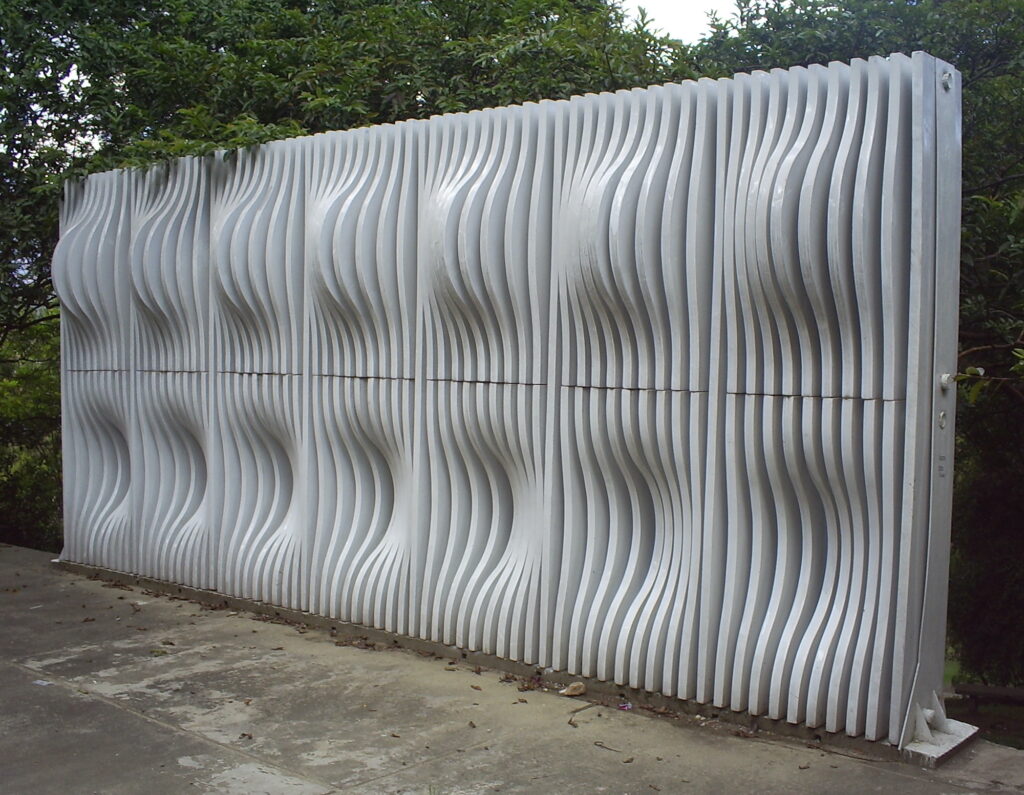
Bild: Julio Le Parc, escultura en el Cerro Nutibara. Medellín, Colombia, 2007 – Foto: SajoR, https://commons.wikimedia.org/wiki/User:SajoR – Lizenz: https://creativecommons.org/licenses/by-sa/2.5/deed.en – Datei: https://commons.wikimedia.org/wiki/File:Escultura_en_el_CerroNutibara-Medellin.JPG
Julio Le Parc, Pioneer of Kinetic Art and Venice Biennale Prize Winner, Dies at 97
For more than six decades, he pursued a simple but radical idea: art should not be something that happens to viewers. It should happen with them.
Working with mirrors, light, movement, color, and optical effects, Le Parc became one of the leading figures of kinetic art. His installations often transformed museumgoers from passive observers into active participants, asking them to wander through mirrored chambers, trigger mechanical devices, or lose themselves in fields of shifting light. Long before museums embraced immersive experiences, Le Parc was creating environments that depended on the viewer’s presence to come fully alive.
Daniel Cassady
Julio Le Parc, pioneer of kinetic art, has died at 97
Over a career spanning more than seven decades, Le Parc developed a pioneering body of work that reimagined what it means to look at art. Using light, optical effects, and interactive installations, he placed the viewer’s experience at the center of his artworks.
These immersive environments and sculptures established him as one of the most significant artists working in kinetic art. His practice, building on the lessons of Concrete art and Lucio Fontana’s Spazialismo movement, was rooted in systems; his lifelong commitment to collective artistic experimentation shaped generations of artists working with perception and participation.
Katie White
https://www.artsy.net/article/artsy-editorial-julio-le-parc-pioneer-kinetic-art-died-97
Julio Le Parc (1928–2026)
‚Everyone at Tate is immensely saddened by the news that Julio Le Parc has passed away. A visionary, Le Parc was truly the grandfather of interactive art, and a key figure in what we now call ‚immersive‘ art. He is rightly celebrated around the world for his iconic kinetic sculptures and his pioneering techniques with light and movement, designed to playfully draw in his viewers.
In recent years it has been an honour for our curators to work so closely with him on his upcoming exhibition at Tate Modern. It has given us a chance to look back with him across his extraordinary seven-decade career, from some of his earliest geometric abstract works created in his native Argentina, through to colourful paintings completed last year in his adopted home of Paris. We hope the show will be a fitting tribute to his endlessly creative and experimental vision.
His death is an enormous loss to the international art community as well as to his many friends and the fellow artists he inspired. In particular, our thoughts are with Julio’s family at this difficult time, especially his three sons, Gabriel, Juan and Yamil.‘
Statement from Catherine Wood, Interim Director of Tate Modern
https://www.tate.org.uk/press/press-releases/julio-le-parc-statement
Julio Le Parc, maître de l’art cinétique, est mort
Le plasticien franco-argentin avait fait de la lumière et du mouvement sa matière première. Il s’est éteint le 30 mai, à l’âge de 97 ans.
«Si mes œuvres mettent les gens en joie, c’est gagné: ces petites choses peuvent aider à changer un état d’esprit. Je me souviendrai toujours de l’énergie que nous donnaient les films de Charlot, à nous, pauvres gamins. C’est cette énergie qui mobilise tous les espoirs, car elle permet de découvrir des choses en soi.» Ainsi parlait Julio Le Parc au moment de sa rétrospective au Palais de Tokyo, à Paris, en 2013.
Emmanuelle Lequeux
Mort du plasticien Julio Le Parc, maître de la cinétique, à 97 ans
L’artiste argentin est décédé à Paris, samedi 30 mai. Engagé, refusant de s’enfermer dans les institutions du monde de l’art, il n’a cessé de penser la relation entre le spectateur et ses œuvres.
Addio a Julio Le Parc, maestro della luce e del movimento: si è spento a 97 anni
Si è spento ieri, sabato 30 maggio, a 97 anni a Parigi Julio Le Parc, l’artista franco-argentino Julio Le Parc, tra le figure più influenti dell’arte contemporanea internazionale e uno dei principali protagonisti dell’Optical Art e dell’arte cinetica. Suo figlio, Yamil Le Parc, ha confermato la notizia della scomparsa al quotidiano argentino «La Nación». Era stato ricoverato negli ultimi giorni a causa di un peggioramento delle sue condizioni di salute ed è deceduto presso l’American Hospital.
Video:
Julio Le Parc | Arte TRACKS, 2020
Mehr:
https://web.archive.org/web/20080516042907/http://julioleparc.ifrance.com/
https://web.archive.org/web/20221005191733/http://www.castellodiboldeniga.it/2004_julioleparc.htm
https://es.wikipedia.org/wiki/Julio_Le_Parc
https://fr.wikipedia.org/wiki/Julio_Le_Parc
(*) https://de.wikipedia.org/wiki/Julio_Le_Parc
#JulioLeParc #CHcultura @CHculturaCH ∆cultura cultura+





Kommentare von Daniel Leutenegger