
26. Mai 2026
ZUM TOD DES US-AMERIKANISCHEN JAZZ-TENORSAXOFONISTEN UND KOMPONISTEN SONNY ROLLINS
Der am 7. September 1930 in New York City als Walter Theodore Rollins geborene US-amerikanische Jazz-Tenorsaxofonist und Komponist Sonny Rollins (Bild) ist am 25. Mai 2026 in Woodstock (New York) gestorben. Rollins war einer der letzten noch lebenden prominenten Musiker der Bebop-Generation gewesen. Er veröffentlichte seit den späten 1940er-Jahren mehr als 60 Alben unter eigenem Namen. Sonny Rollins war einer der einflussreichsten Jazz-Saxofonisten überhaupt; er «löste die Improvisation aus der Umklammerung des Themas. Mit Kraft und Witz erfand er endlose Assoziationsketten, die bereits Mitte der 1960er-Jahre in Solokonzerten gipfelten» (Reclams Jazzlexikon). Rollins’ Spielweise «zeichnete sich durch seine kraftvollen Klangfarben, seine melodischen Improvisationen und seine technische Virtuosität aus. Er war bekannt für seine Fähigkeit, komplexe Rhythmen zu meistern und einzigartige musikalische Ideen zu entwickeln.» (*) Sonny Rollins spielte wohl mit praktisch allen berühmten Jazz-Musiker:innen seiner Zeit zusammen; besonders bedeutungsvoll war die Zusammenarbeit u.a. mit Thelonius Monk, Miles Davis, Art Blakey, Max Roach, John Coltrane, Jim Hall, Don Cherry, Paul Bley, Coleman Hawkins, Ron Carter, McCoy Tyler, …
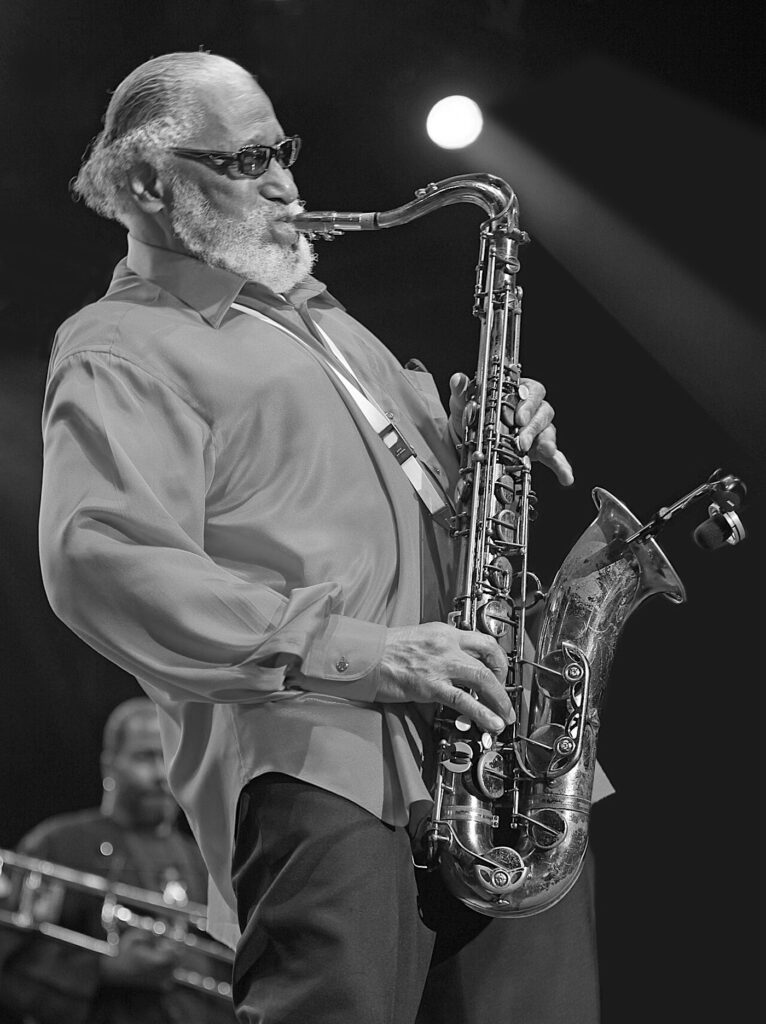
Bild: Sonny Rollins, 2009 – Foto: Bengt Nyman, https://www.flickr.com/people/97469566@N00 – Lizenz: https://creativecommons.org/licenses/by/2.0/deed.en – Datei: https://commons.wikimedia.org/wiki/File:Sonny_Rollins_2009.jpg
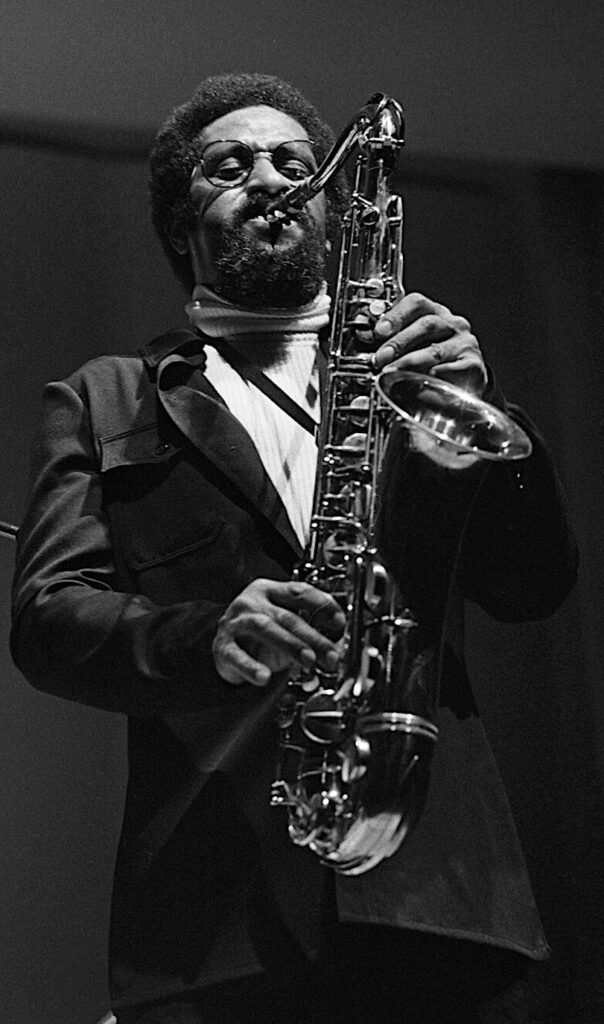
Bild: Sonny Rollins, 1972 – Foto: JOKA Journalistinen kuva-arkisto; Hufvudstadsbladet, https://finna.fi/Record/museovirasto.60c2eb5f-7ee7-429e-bda5-00d65a22f66d – Lizenz: https://creativecommons.org/licenses/by/4.0/deed.de – Datei: https://commons.wikimedia.org/wiki/File:Sonny_Rollins_concert_in_Helsinki_1972_(JOKAHBL3F_C32-2).tif?page=1&uselang=de
It is with deep sorrow and profound love that we announce the passing of Sonny Rollins
The Saxophone Colossus died this afternoon at his home in Woodstock, NY at the age of 95.
“I think when the creative person ends, he continues in the next existence. I’m a person who believes this life isn’t the be-all and end-all of everything. A spiritual person doesn’t feel like that.” –S.R. (2009)
https://www.facebook.com/officialsonnyrollins
Sonny Rollins, Giant of the Jazz Saxophone, Is Dead at 95
Even by the standards of a music that prizes individuality, he stood out, as both a musician and a personality.
Peter Keepnews
https://www.nytimes.com/2026/05/25/arts/music/sonny-rollins-dead.html
Nicknamed the Saxophone Colossus
Sonny Rollins, the iconic saxophonist, composer and improviser whose career stretched from the origins of bebop to 21st century free melodicism — encompassing calypsos, reshaping the blues, touching on rock and relentlessly reinterpreting the American songbook — died Monday, May 25, at his home near Woodstock, New York. Rollins was 95 years old and, suffering from respiratory illness, had retired from public performance in 2012.
Rollins was one of the last giants standing, the pre-eminent elder of the jazz generation including Charlie Parker, Dizzy Gillespie, Kenny Clarke, Max Roach, Thelonious Monk and Miles Davis that developed the music from a danceable entertainment to a profoundly expressive, ever-evolving art form of intense personal meaning, challenging without losing accessibility. He was a creative force into his eighth decade, an international headliner and a spokesman for enduring jazz values, particularly the inspiration of the moment.
Howard Mandel
https://downbeat.com/news/detail/sonny-rollins-dies-at-95
Sonny Rollins, One of Jazz’s Greatest Saxophonists, Dies at 95
His 1956 album Saxophone Colossus is considered one of the essential documents in all of jazz.
His passing marks the end of a direct line to jazz’s post-war golden age. Rollins came of age alongside Miles Davis, John Coltrane, Thelonious Monk, Dizzy Gillespie and Charlie Parker — and outlived them all, spending the decades after their deaths as a living link to that era’s creative revolution.
Jessica Lynch
https://www.billboard.com/music/music-news/sonny-rollins-dies-at-95-1236256529
Sonny Rollins, Jazz’s Saxophone Colossus and Greatest Improvisor, Dead at 95
Alongside his own pioneering albums as band leader, Rollins also recorded with Miles Davis, Thelonious Monk, and the Rolling Stones, contributing the sax solo to «Waiting on a Friend»
The Harlem-raised Rollins came to jazz at an early age, first as a pianist before switching to the saxophone. “My mother gave me my first saxophone, an alto saxophone, when I was 7 years old. I got the saxophone and I went into the bedroom and I started playing — that was it,” Rollins told Jazz Times. “I was in seventh heaven. My mother had to call me: ‘It’s time to eat dinner and come out.’ I could have been there forever. I love playing by myself. I’m practicing but I’m also communicating with my musical muse.”
Daniel Kreps
Sonny Rollins, Jazz’s ‘Saxophone Colossus,’ Dies at 95
Tenor saxophonist Sonny Rollins, the “Saxophone Colossus” who was schooled by bebop’s legends as a prized sideman and became their peer as a formidable leader, improviser and composer, has died, according to a social media post from his family. (…)
Sporting a burly tone, a tart sense of instrumental humor and keen melodic and harmonic ingenuity, Rollins was acknowledged as a jazz voice as groundbreaking as that of his friend and contemporary John Coltrane, with whom he unforgettably locked horns on “Tenor Madness” in 1956.
Chris Morris
https://variety.com/2026/music/news/sonny-rollins-dead-jazz-saxophone-colossus-1236758510
Sonny Rollins, pioneering jazz saxophonist, dies at 95
His long, productive career encompassed more than six decades, in each of which his live performances and recordings continually attested to his preeminence as one of jazz history’s most vital, innovative and influential artists.
“Rollins has an original jazz voice,” critic Zan Stewart wrote in The Times in 1990, “rooted in the bebop mode, but a voice that has evolved over time, incorporating other styles and other forms as they fit that voice.” His magisterial presence was a constant in his performances, from the time he was in his 20s into his later years. A commanding figure at 6 feet 2, he played with a sound and an articulation to match his visual image. His affection for standard tunes brought startlingly new vitality to such unlikely songs as “The Surrey With the Fringe on Top.” And, on any given night, he didn’t hesitate to expand an improvisation to startling lengths, finding new ideas well beyond the imaginative limits of most jazz players.
Nardine Saad and Don Heckman
https://www.latimes.com/obituaries/story/2026-05-25/sonny-rollins-jazz-saxophone-dead
One of the last stars of the bebop generation, Rollins was a genius of melodic invention and improvisation, working with Davis, Monk, Coltrane and others
With more than 60 albums released from the late-1940s onwards, including collaborations with Miles Davis, Thelonious Monk, John Coltrane and others, Rollins was one of the last living stars of the bebop generation, who took jazz from a predominantly dance or ballad form into startlingly expressive new territory.
Rollins himself was a genius of melody, whose bright, catchy lines – whether jazz standards or self-penned – would be unpicked, extended and refashioned in improvised and sometimes epic solos.
Saxophonist Branford Marsalis has called him “the greatest improviser in the history of jazz” alongside Louis Armstrong; when presenting him with the 2010 National Medal of the Arts in 2011, Barack Obama said Rollins had inspired him to “take risks that I might not otherwise have taken”.
Ben Beaumont-Thomas
https://www.theguardian.com/music/2026/may/26/sonny-rollins-jazz-saxophone-dies-aged-95
Jazz legend Sonny Rollins dies aged 95
In 2010, Rollins received the National Medal of the Arts from US president Barack Obama, who said the jazz musician had inspired him to «take risks that I might not otherwise have taken».
Known for long solos, Rollins was considered among the best improvisers and told PBS he would go on stage with his mind blank and no plan beyond an awareness of the structure of the piece. «Improvising on it, that I leave completely to the forces,» he said. «Sometimes I’m surprised by what comes out.»
Toby Mann
https://www.bbc.com/news/articles/c1e224dwz18o
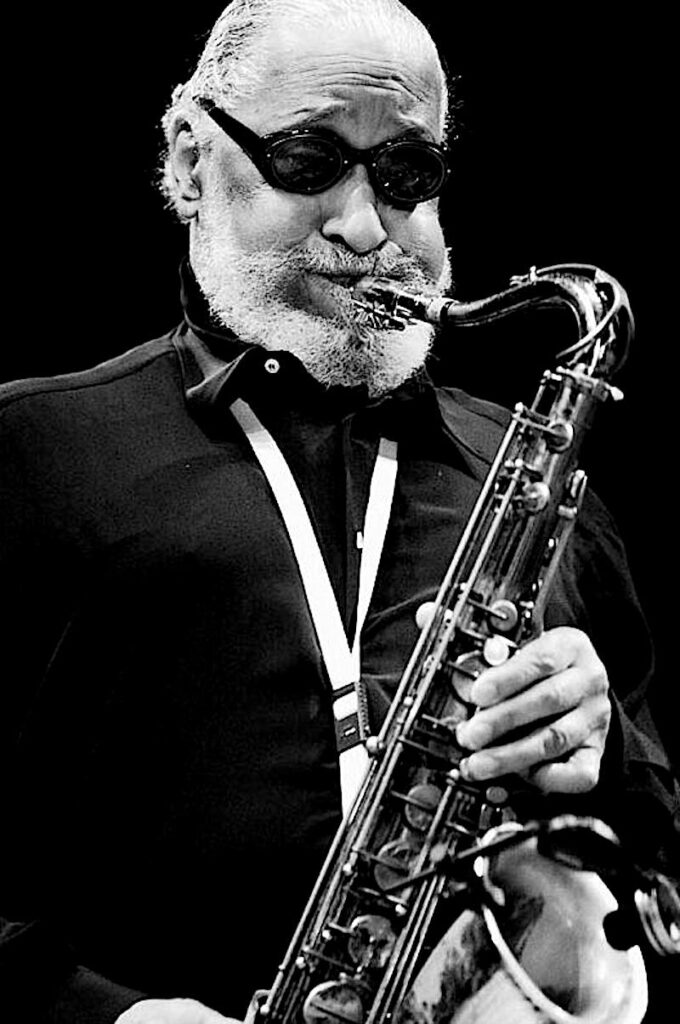
Bild: Sonny Rollins, 2007 – Foto: Hans Reitzema, https://www.flickr.com/people/7250175@N04 – Lizenz: https://creativecommons.org/licenses/by/2.0/deed.en – Datei: https://commons.wikimedia.org/wiki/File:Sonny_Rollins_3.jpg
Muere a los 95 años Sonny Rollins, gigante del jazz y coloso del saxofón
El músico, leyenda de la improvisación, era uno de los últimos supervivientes de la edad dorada del género
Improvisador de imaginación inagotable, su carrera abarcó casi siete décadas al servicio del saxo tenor, instrumento del que extrajo un sonido profundo e imprevisible, que, siempre desde el swing, coqueteó lo mismo con la vanguardia que con ritmos como la soca y el calipso. También hizo excursiones al rock, como aquella vez que tocó en 1981 unos solos en el disco Tattoo You, de los Rolling Stones, banda con la que luego declinó salir de gira.
Iker Seisdedos
Sonny Rollins, morto a 95 anni uno dei più grandi sassofonisti di tutti i tempi
Genio della musica, Branford Marsalis lo aveva definito «il più grande improvvisatore nella storia del jazz» insieme a Louis Armstrong; quando gli conferì la National Medal of the Arts nel 2011, Barack Obama disse che Rollins lo aveva ispirato a «correre rischi che altrimenti non avrebbe corso». Con oltre 60 album pubblicati a partire dalla fine degli anni 40 – tra cui collaborazioni con Miles Davis, Thelonious Monk, John Coltrane e altri – Rollins era una delle ultime stelle viventi della generazione bebop, che trasformò il jazz in un territorio espressivo fino ad allora inesplorato.
Andrea Silenzi
https://www.repubblica.it/spettacoli/2026/05/26/news/morto_sonny_rollins_leggenda_del_jazz-425370220
Mort de Sonny Rollins: le grand saxo
En perpétuelle recherche, quittant plusieurs fois le devant de la scène pour revenir plus haut, se forgeant un statut de légende aux côtés de Miles Davis ou John Coltrane, le saxophoniste, mort lundi à l’âge de 95 ans, aura marqué de son empreinte plus de soixante ans de jazz.
Jacques Denis
Sonny Rollins, géant du saxophone et du jazz, est mort
Auteur d’une vingtaine d’albums majeurs de l’histoire du jazz, l’ancien compagnon de route de John Coltrane, de Charlie Parker ou encore de Miles Davis fut l’inventeur d’une forme unique de concert fleuve. Il est mort le 25 mai à l’âge de 95 ans.
Compagnon de tous les maîtres de la musique afro-américaine à partir de Charlie «Bird» Parker (1920-1955), auteur d’une vingtaine d’albums majeurs de l’histoire du jazz, inventeur, pour ses trois dernières décennies, d’une forme unique de concert fleuve au plus près des publics, le saxophoniste (ténor) et compositeur américain Theodore Walter Rollins, dit Sonny Rollins, est mort lundi 25 mai, à l’âge de 95 ans, à son domicile de Woodstock, dans l’Etat de New York.
Francis Marmande
Figure de l’âge d’or du jazz, Sonny Rollins est décédé à 95 ans
Reconnaissable ces dernières années à sa barbe et son imposante chevelure blanches, il était considéré comme l’un des plus grands saxophonistes au monde, aux côtés de Charlie Parker, Coleman Hawkins ou John Coltrane.
Contrairement à beaucoup d’artistes de cette période du jazz d’après-guerre, disparus prématurément, Sonny Rollins aura connu une carrière longue et prolifique, travaillant encore au-delà de ses 80 ans malgré des problèmes respiratoires qui limitaient ses performances.
afp / jtr
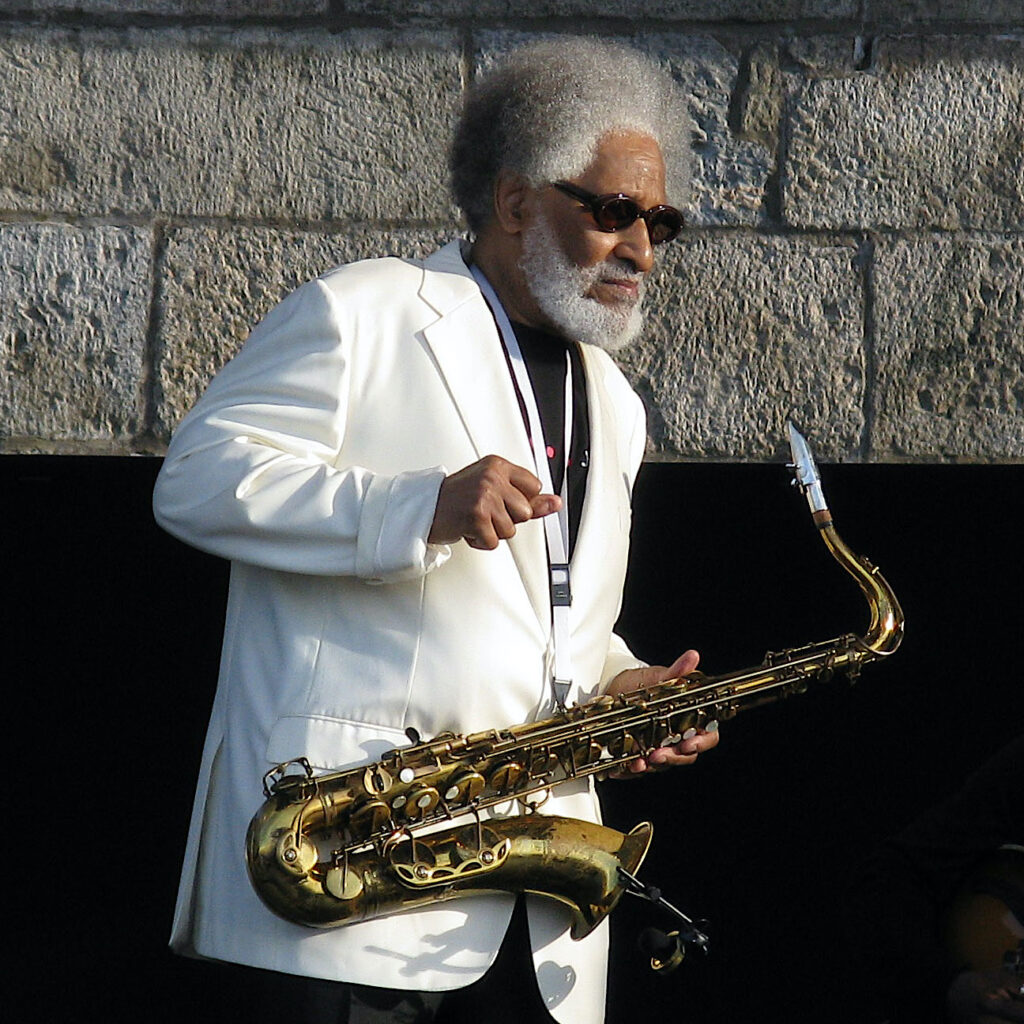
Bild: Sonny Rollins, 2008 – Foto: RI-jim, https://commons.wikimedia.org/wiki/User:RI-jim – Lizenz: https://creativecommons.org/licenses/by-sa/3.0/deed.en – Datei: https://commons.wikimedia.org/wiki/File:Sonny_Rollins_at_Newport_2008.jpg
Der Koloss
Die Spiritualität erlöste den Saxofonisten Sonny Rollins erst vom Heroin und brachte seinem Ton dann die unbändige Kraft. Nachruf auf einen, der bis zuletzt glaubte, dass er mehr können müsste, um mehr zu sagen.
Andrian Kreye
https://www.sueddeutsche.de/kultur/sonny-rollins-tot-nachruf-li.3489121?reduced=true
https://www.tagesanzeiger.ch/sonny-rollins-jazz-war-fuer-ihn-eine-lebensform-762684777760
Wenn er spielte, ging die Sonne auf
Saxophonist Sonny Rollins wurde als Gigant, Koloss und Titan bezeichnet. Er war einer der letzten Vertreter der goldenen Zeit des Jazz. Nun ist er im Alter von 95 Jahren gestorben. In seiner Karriere erfand er sich immer wieder neu. Erinnerungen (…) an einen Musiker, der den Jazz geprägt hat.
Ulrich Habersetzer
https://www.br-klassik.de/aktuell/news-kritik/sonny-rollins-jazzlegende-gestorben-portraet-100.html
Der Koloss am Tenor
Sonny Rollins war stilprägender US-Saxofonist und eine frühe Stimme der Bürgerrechtsbewegung.
Er mischte sich ein. Sonny Rollins, bis zuletzt bedeutendster lebender Saxofonist der Bebop-Ära des Jazz und dazu modisch immer ein Hipster, war stets ein politisch wacher Beobachter. Obwohl er bereits 2012 sein letztes offizielles Konzert gab und seit 2014 aufgrund einer Lungenfibrose gar nicht mehr spielen durfte.
Jazz war für Rollins immer auch dringlicher aktueller Gesellschaftskommentar: Von seiner „Freedom Suite“ (1958) für die Schwarze Bürgerrechtsbewegung, der Irokesenfrisur 1959 als Zeichen seiner Solidarität mit den vertriebenen Native Indians, die ursprünglich auf dem heutigen Gebiet von New York lebten, bis zu seiner zornigen Kampfansage gegen die globale Erderwärmung auf „Global Warming“ (1997). Noch 2020 erklärte sich Sonny Rollins in der New York Times solidarisch zur „Black Lives Matter“-Bewegung, angesichts des gewaltsamen Todes von George Floyd.
Maxi Broecking
https://taz.de/US-Jazzsaxofonist-Sonny-Rollins-ist-tot/!6181844
Der Letzte aus der größten Generation des modernen Jazz
Der Saxofonist Sonny Rollins war ein Superstar des Jazz: Vorbild von Lisa Simpson, bewundert von den Rolling Stones. Doch wirklich bei sich selbst war er viel mehr auf einer Brücke, wo er im rauen Wind den perfekten Ton suchte.
Josef Engels
Sein Saxofon klang wie die Schiffshörner auf dem Hudson River
Sonny Rollins war kein Revolutionär und spielte sich doch von allen Jazz-Konventionen frei. Nun ist der letzte Riese der Bebop-Ära mit 95 Jahren gestorben.
Tobi Müller
https://www.zeit.de/feuilleton/musik/2026-05/sonny-rollins-tenor-saxophonist-jazz-tod
«Größter Tenorsaxofonist aller Zeiten»
Wer meint, nur die Greenhorns des Jazz müssten fleißig üben, der irrt. Charlie Parker, John Coltrane, Sonny Rollins: Alle drei Saxofon-Ikonen verfeinerten ihre Fähigkeiten am Instrument noch in einsamen Stunden, als sie längst ausgewachsen waren. Am weitesten trieb es diesbezüglich wohl Rollins. 1959 – der Tenorsaxofonist stand bereits im Zenit seines Ruhms – verschwand der Mann aus New York plötzlich von den Bühnen. Stattdessen bezog er täglich Position auf der Williamsburg-Brücke über dem East River – und übte, bis die Klappen rauchten.
Vermutlich hat auch diese Trainingslust dazu beigetragen, dass Miles Davis den Bandkollegen als «größten Tenorsaxofonisten aller Zeiten» rühmte. Wobei: Rollins besaß nicht nur höchste Virtuosität und eine geschmeidige Dynamik. Er hatte zudem einen Personalstil ausgeprägt, der aus knappen Motiven eine kaleidoskopische Fülle an Variationen entwickelte.
Christoph Irrgeher
Der beschwingte Erzähler
Er war ein phantastischer Saxofonist und ein freundlicher, bescheidener Mensch. Dem Hermetischen und Elitären abgeneigt, zelebrierte Sonny Rollins das Monumentale seines Könnens stets in zugänglicher Form. Seine fruchtbare Phantasie äusserte sich in verständlichen, einfachen Motiven. Dabei pflegte der hünenhafte Musiker, einer der letzten Jazz-Giganten, seine Bedeutung selbst stets kritisch zu hinterfragen und zu relativieren.
Ueli Bernays
https://www.nzz.ch/feuilleton/sonny-rollins-abschied-von-einem-jazz-ikonen-ld.10008447
Er war der letzte Jazz-Gigant
Rollins erlebte und prägte die Blütezeit des Jazz. Dank selbstauferlegten Pausen erfand er sich immer wieder neu
Stefan Künzli
Der Saxophon-Koloss von der Williamsburg Bridge ist verstummt
Mitten in New York steht ein Saxophonist und spielt, bei Wind und Wetter, zwei Jahre lang. Es ist Sonny Rollins, der sich nach seiner ersten schwindelerregenden Karriere auf eine Brücke zurückzieht, um zu üben. Das Bild wird im kollektiven Gedächtnis haften bleiben – auch über Rollins‘ Tod hinaus.
Sonny Rollins ist im Alter von 95 Jahren gestorben. Rollins war Sound. Ein grosser, farbiger, fetter Tenorsaxofon-Sound. Mit diesem Sound liebte er es, lange Linien zu spielen und damit Geschichten zu erzählen, kraftvoll, mit viel Zug und doch entspannt. Er möge einfache Themen, sagte er einmal – die Komplexität liege in seinen Soli.
Es stimmt, viele seiner Kompositionen tönen fröhlich und direkt, manchmal wie Kinderlieder. Für die Improvisation über das Thema macht dann das Kind dem reflektierenden Musiker Platz, der das melodische Material dreht und wendet, weiterentwickelt, dekonstruiert und wieder zusammensetzt.
Dass das Einfache schwierig werden kann und das Schwierige einfach – das ist die Geschichte von Rollins’ Leben. Dem Wunderkind fliegt scheinbar alles zu auf dem Saxophon. Seine Anfänge sind traumhaft, schon als Zwanzigjähriger nimmt er mit dem grossen Trompeter Miles Davis auf. Der schnelle Erfolg bringt allerdings auch Stress und Drogen. Sonny Rollins gelingt der Entzug, und der setzt ungeahnte Energien frei – mit Alben wie «Saxophone Colossus» (mit seiner berühmten Nummer «St.Thomas») oder «Way Out West» spielt er sich in eine eigene Kategorie und erfindet darüber hinaus ein neues Genre: das Trio ohne Harmonieinstrument, also nur mit Bass, Schlagzeug und Saxophon.
Scheinbar mühelos kommt Sonny Rollins ganz oben an auf dem Jazz-Olymp, noch vor seinem dreissigsten Geburtstag. Als ihm das wieder allzu schnell geht und der Druck zu gross wird, reagiert er dieses Mal klüger: Er gibt nach den Drogen auch das Rauchen und Trinken auf und zieht sich zwei Jahre auf die Williamsburg Bridge zurück.
Jodok Hess
Audios / Videos:
You Don’t Know What Love Is, 1956 (Rudy Van Gelder Remastered 2006 / Shared ISRC)
Sonny Rollins – God Bless the Child, The Big, 1962
Sonny Rollins – Oleo
Sonny Rollins – St.Thomas
The Bridge/ Sonny Rollns & Jim Hall
Way Out West by Sonny Rollins from Way Out West
Sonny Rollins Alfie’s Theme 1973
The Rolling Stones – Waiting On A Friend – OFFICIAL PROMO
Sonny Rollins Commercial
Sonny Rollins – A Nightingale Sang In Berkeley Square (Official Audio), 2000
Sonny Rollins – The Cutting Edge (Live Montreux / 1974) (Official Audio)
Sonny Rollins – Camel – Live at Montreux Casino, Montreux Jazz Festival – 1978
Sonny Rollins Trio Live in Zurich, Switzerland – 1959 (audio only)
Mehr:
https://sonnyrollins.com/?fbclid=IwY2xjawSCzNZleHRuA2FlbQIxMABicmlk
https://www.facebook.com/officialsonnyrollins
https://www.discogs.com/de/artist/145264-Sonny-Rollins
https://www.jazzdisco.org/sonny-rollins/discography
https://www.imdb.com/de/name/nm0738456
https://www.nytimes.com/interactive/2020/02/24/magazine/sonny-rollins-interview.html
https://www.nytimes.com/2026/05/25/arts/music/sonny-rollins-albums.html
https://web.archive.org/web/20171110005149/http://www.jazzcorner.com/news/display.php?news=5962
https://achievement.org/achiever/sonny-rollins/#interview
https://archives.nypl.org/scm/24238
https://www.jazztimes.com/features/interviews/sonny-rollins-ideas-are-important/?v=d88fc6edf21e
https://en.wikipedia.org/wiki/Sonny_Rollins
(*) https://de.wikipedia.org/wiki/Sonny_Rollins
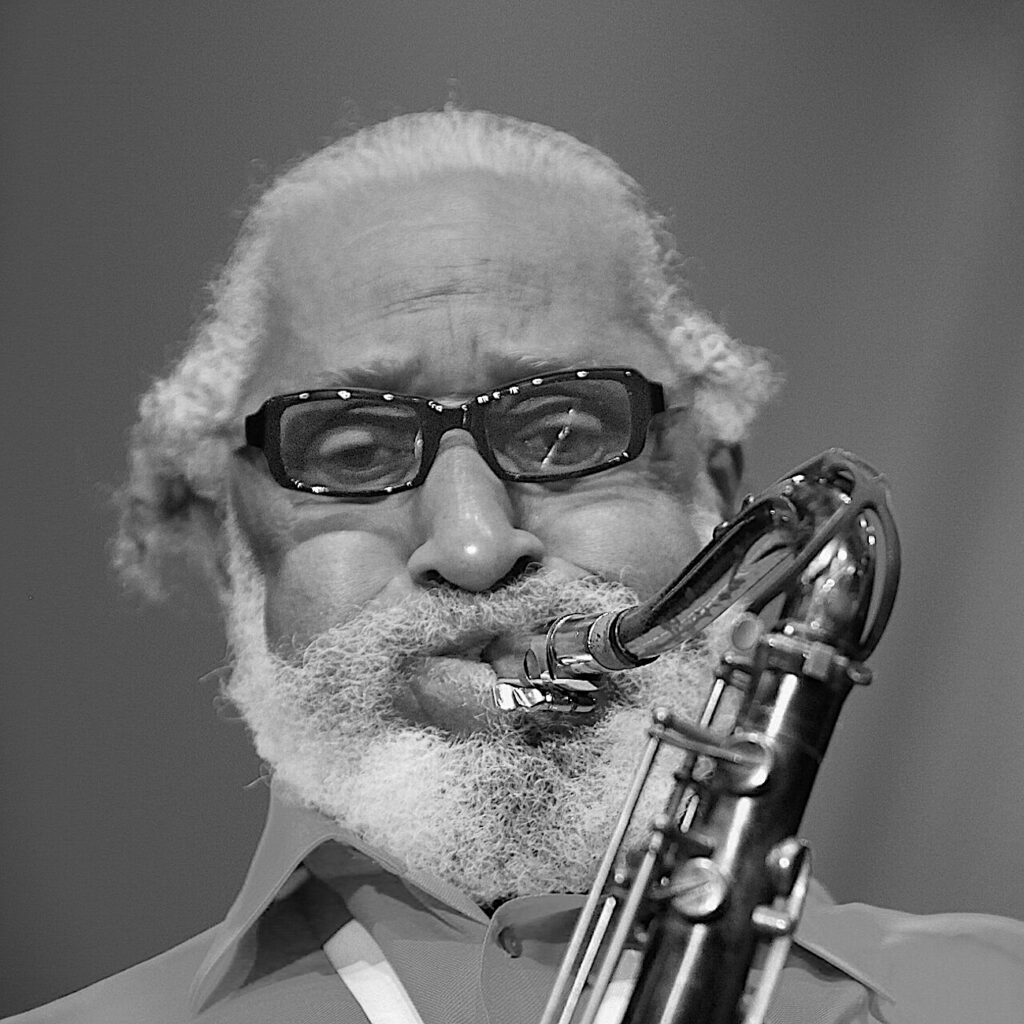
Bild: Sonny Rollins, 2009 – Foto: Bengt Nyman, https://www.flickr.com/people/97469566@N00 – Lizenz: https://creativecommons.org/licenses/by/2.0/deed.de – Datei: https://commons.wikimedia.org/wiki/File:Sonny_Rollins_at_Stockholm_Jazz_Fest_2009.jpg?uselang=de
#SonnyRollins #CHcultura @CHculturaCH ∆cultura cultura+







Kommentare von Daniel Leutenegger