Der am 9. Oktober 1934 als Adolph Johannes Brand in Kapstadt geborene südafrikanische Pianist und Komponist Abdullah Ibrahim (Bild) ist am 15. Juni 2026 in Prien am Chiemsee (Bayern, D) gestorben. Ibrahim spielte auch Flöte, Saxophon und Cello. Er galt als Protagonist des Modern-Creative-Stils in der Jazzmusik. Vor seiner Konversion zum Islam und der Annahme des Namens Abdullah Ibrahim im Jahr 1968 trat er unter dem Künstlernamen Dollar Brand auf. Seine Komposition «Mannenberg» wurde zu einer inoffiziellen Hymne des Widerstands gegen die Apartheid. In den 1960er-Jahren lebte Abdullah Ibrahim zeitweise in Zürich, wo er im legendären Café Africana auftrat und Duke Ellington kennenlernte. 1965 übersiedelte er nach New York und spielte beim Newport Jazz Festival. In den USA arbeitete er mit einem eigenen Trio sowie u.a. mit Duke Ellington, John Coltrane, Ornette Coleman, Elvis Jones, Don Cherry, Max Roach, Archie Shepp oder Gato Barbieri zusammen. Nachdem Ibrahim 1990 in Deutschland den kurz zuvor freigelassenen Nelson Mandela getroffen und dieser ihn zur Rückkehr aufgefordert hatte, ging er nach Südafrika zurück. Er beeinflusste in der Folge die südafrikanische Jazzszene massgeblich, behielt jedoch zugleich einen Wohnsitz in New York. 1994 spielte er mit einem Sinfonieorchester bei der Amtseinführung Mandelas zum Präsidenten Südafrikas. In seiner rund acht Jahrzehnte umspannenden Laufbahn nahm Ibrahim mehr als 70 Alben auf. Als letzte Aufnahme erschien 2024 das Doppelalbum «3». Seinen letzten Soloauftritt absolvierte er im März 2026 beim Cape Town International Jazz Festival. Abdullah Ibrahim lebte zuletzt in Bayern. (*)
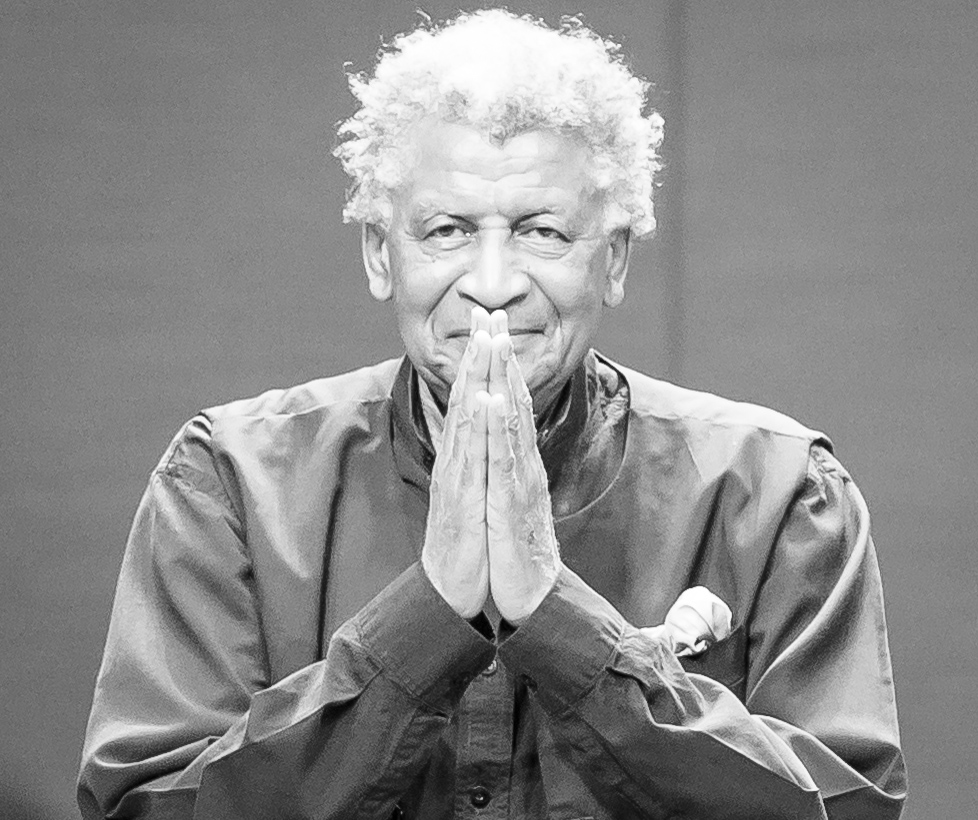
Bild: Abdullah Ibrahim, 2016 – Foto: Tore Sætre, https://commons.wikimedia.org/wiki/User:Toresetre / https://setre.net/ – Lizenz: https://creativecommons.org/licenses/by-sa/4.0/ – Datei: https://commons.wikimedia.org/wiki/File:Abdullah_Ibrahim_Oslo_Jazzfestival_(191441).jpg
President Ramaphosa mourns passing of cultural activist and jazz icon Abdullah Ibrahim
President Cyril Ramaphosa has expressed his profound sadness at the passing of cultural activist, global jazz icon and Esteemed Member of the Order of Ikhamanga, Abdullah Ibrahim.
As a pianist, composer, arranger and mentor, Abdullah Ibrahim campaigned against apartheid and drew audiences to his highly curated performances that showcased his accomplishment as a soloist and his collaboration with established and emerging talent.
His music also projected his spirituality and contemplative practice of martial arts.
In 2009, he was awarded the Order of Ikhamanga in Silver, in recognition of his excellent contribution to the arts, his success in putting South African music on the international map, and his lifelong fight against racism and apartheid.
President Ramaphosa said: “Today our nation mourns the passing of an international icon and global citizen whose profound creations honoured the South Africa that shaped his political commitment and musical brilliance.
“As we commemorate the 50th anniversary of the Youth Uprising, the passing of Abdullah Ibrahim reminds us of the then illegal benefit concert he organised in support of the liberation movement following the Uprising, as a demonstration of his commitment to our struggle.
“We give thanks for the many decades of his life that he devoted to his personal passion which he shared with humanity through his recordings and his appearances in clubs and concert halls throughout the globe.
“He has enriched our lives with his musical gifts and his involvement in making the world a better place.
A legacy in South African Jazz
The Cape Town International Jazz Festival (CTIJF) is deeply saddened by the passing of Abdullah Ibrahim,91, one of South Africa’s most revered cultural icons and a towering figure in the global jazz community. The CTIJF is especially honoured to have formed part of the final chapter of his extraordinary musical journey. Ibrahim’s final public performance took place at the festival on the Rosies Stage on Friday, 27 March 2026. In what will now be remembered as a historic homecoming moment, audiences witnessed one of the greatest musicians of our time deliver a performance that reflected the grace, depth and mastery that defined his remarkable career. It was a fitting farewell in Cape Town, where he was born and raised. The city shaped so much of his musical identity. His relationship with the festival spanned many years, having also performed in 2004 as the Abdullah Ibrahim Trio, in 2014 with Ekaya and in 2019 with Ibrahim Shihab.
Khalil Shihab
International jazz legend Abdullah Ibrahim dies at 91, leaving a timeless musical legacy
The icon had an incredible life and career in jazz, travelling across continents. He made a big impact on the global jazz scene as one of the most influential and celebrated artists.
His family said that Ibrahim carried the spirit and sound of South Africa to audiences across the world for more than seven decades. “Abdullah passed away peacefully with South Africa and its people in his heart. His love for his country never wavered, no matter where in the world he found himself,” Ibrahim’s partner Dr Marina Umari said.
Chulumanco Mahamba
Abdullah Ibrahim passes away aged 91!
His musical journey began at the age of seven when he started taking piano lessons. By the age of 15, he had already made his professional debut, launching a career that would span more than seven decades and leave an indelible mark on the world of music.
Raised in a culturally rich environment in Cape Town, Abdullah was exposed to traditional African music, Christian hymns, gospel and Western jazz from an early age. These influences helped shape the distinctive sound that would define his career.
In 1968, he converted to Islam and adopted the name Abdullah Ibrahim before undertaking a pilgrimage to Mecca in 1970.
During apartheid, Abdullah spent much of his life in exile, primarily in Europe and the United States, before returning to South Africa in the early 1990s.
While his passing marks the end of an extraordinary life, his voice will live on through the timeless music that helped shape South Africa’s cultural identity and touched audiences across the globe.
Hamba kahle, Abdullah.
Doreen Molefe
Jazz icon Abdullah Ibrahim has died
Ibrahim, who toured the world with his music, is known not just for his talent but also his contribution in using the creative space to push back against South Africa’s apartheid-era government in the 1970s and 80s.
In 2009, the South African government awarded him with the Order of Ikhamanga for his contribution to the arts, putting South Africa on the international map and his fight against racism and apartheid.
https://www.sowetan.co.za/news/2026-06-15-jazz-icon-abdullah-ibrahim-has-died
Abdullah Ibrahim, Eminent South African Jazz Pianist, Dies at 91
Abdullah Ibrahim, a jazz pianist and composer whose elegant, meditative style mingled the sounds of his native Cape Town with musical traditions from around the world, making him an admired ambassador of the anti-apartheid movement, died on Monday in Prien am Chiemsee, a town south of Munich.
Mr. Ibrahim — who was known as Dollar Brand before converting to Islam in the late 1960s — folded the music of his South African hometown into an ongoing conversation with the latest evolutions in American and European jazz. For years, he was embraced by the standard-bearers of the avant-garde music scene, including the saxophonist Ornette Coleman.
For all its disparate components, Mr. Ibrahim’s music never sounded like a crude synthesis — perhaps by dint of the unhurried grace of his playing and the deep spirituality of his approach. In his frequent solo concerts, he often performed lengthy, unbroken sets, fluidly folding together different themes and compositions as inspiration dictated.
Giovanni Russonello
https://www.nytimes.com/2026/06/15/arts/music/abdullah-ibrahim-dead.html#gateway-content
South African jazz legend Abdullah Ibrahim dies at 91
As a teenager, the pianist and composer played in a swing band, his own trio and then in a sextet called the Jazz Epistles, which also included another South African jazz great, Hugh Masakela.
As apartheid, which began to be legally enforced in 1948, became increasingly rigid, jazz music, which was seen as counter-cultural and encouraged racial mixing, was looked down on.
The political situation in South Africa led to the break-up of the band, and Ibrahim moved to Switzerland. American jazz legend Duke Ellington heard Ibrahim and took him to the US. Gradually, his distinctive style began to emerge – music that recalled the sounds of South Africa, and mixed his country’s vocal and harmonic traditions with the rhythmic feeling and improvisation of jazz, according to a BBC Radio 3 profile.
Despite living outside South Africa, he never forgot his roots and made frequent trips to the country to perform and record.
Damian Zane
https://www.bbc.com/news/articles/cy5vngrq3q5o
Abdullah Ibrahim obituary
The pianist Abdullah Ibrahim, who has died aged 91, was among the first musicians from South Africa to achieve and sustain a major reputation with the international jazz audience. Listeners around the world, at first in small clubs and later in the grandest concert halls, fell under the spell of his compositions and improvisations, which took a sophisticated idiom originally created by the descendants of enslaved Africans and reinfused it with a primal warmth.
He was still known as Dollar Brand, a combination of his nickname and his family surname, when he and his wife-to-be, the singer Bea Benjamin, arrived in Europe in 1962 as refugees from the apartheid state. In Zurich he was heard by Duke Ellington, his idol, who became an early patron. During subsequent spells in New York he played with many important American musicians, quickly convincing them that an African voice could add something different, at once ancient and brand new, to their music.
Back home, his music played a part in the freedom struggle. His tune Mannenberg, recorded during a return visit in 1974, became an anthem of the movement, its title referring to a Cape Flats township created under the Group Areas Act to house black South African people evicted when Cape Town’s District Six was designated a whites-only area.
Richard Williams
https://www.theguardian.com/music/2026/jun/16/abdullah-ibrahim-obituary
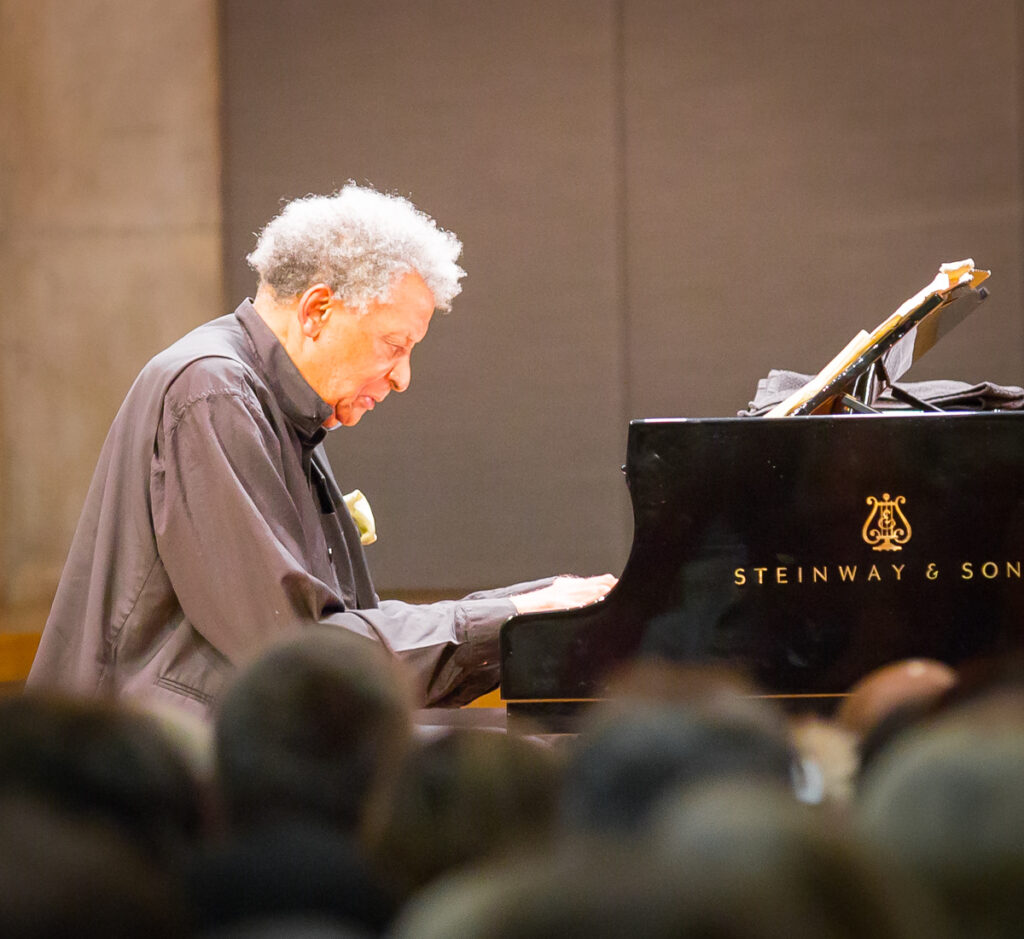
Bild: Abdullah Ibrahim, 2016 – Foto: Tore Sætre, https://commons.wikimedia.org/wiki/User:Toresetre / https://setre.net/ – Lizenz: https://creativecommons.org/licenses/by-sa/4.0/ – Datei: https://commons.wikimedia.org/wiki/File:Abdullah_Ibrahim_Oslo_Jazzfestival_(184325).jpg
Muere Abdullah Ibrahim, la leyenda del jazz que desafió al apartheid con su piano, a los 91 años
Abdullah Ibrahim nació como Adolph Johannes Brand en Ciudad del Cabo, Sudáfrica, en 1934, en un país entonces marcado por la segregación y la discriminación, donde se entregó a la espiritualidad y a la expresión artística.
Fue un pionero del jazz en el continente africano con su formación The Jazz Epistles a mediados de los años cincuenta. En este grupo se encontraban también el trompetista Hugh Masekela (1939-2018) y el trombonista Jonas Gwangwa; se convirtió en la primera agrupación negra en grabar un LP en Sudáfrica, Jazz Epistle Verse One (1960).
En los años 60 era conocido artísticamente como Dollar Brand, un apodo que lo identificaría durante su primer exilio en Europa a comienzos de esa década, recorriendo Suiza, Francia, Alemania y Dinamarca.
De la mano de Duke Ellington, quien quedó fascinado por su forma de tocar el piano, realizó una grabación en París. Así, a comienzos de 1963, Dollar Brand fue reconocido como miembro de la familia del jazz internacional con el lanzamiento de Duke Ellington Presents The Dollar Brand Trio (1963).
Abdullah Ibrahim: musica contro l’apartheid
Il jazz di Abdullah Ibrahim era un ponte: tra Africa e America, tra spiritualità e lotta, tra memoria e resistenza. Più volte a Lugano, ha legato il suo nome alla storia di Estival jazz.
Pianista e compositore tra i più influenti del Novecento, è morto all’età di 91 anni Abdullah Ibrahim. La sua musica ha saputo fondere i canti e i ritmi dell’Africa australe con il linguaggio del jazz americano, creando uno stile inconfondibile, profondo e insieme politico.
Nato nel 1934 a Città del Capo, crebbe nelle township segnate dalla segregazione, sviluppando fin da giovane una sensibilità musicale nutrita dal gospel, dal marabi e dai dischi jazz americani. Con il nome di Dollar Brand iniziò a farsi conoscere sulla scena internazionale, prima della conversione all’Islam negli anni Sessanta.
Costretto all’esilio durante l’apartheid, collaborò con giganti come Duke Ellington, John Coltrane e Ornette Coleman, diventando una delle voci più autorevoli del jazz globale. La sua composizione più celebre, Mannenberg (1974), divenne un inno della resistenza sudafricana.
Mat
Le grand pianiste de jazz sud-africain Abdullah Ibrahim est décédé
Il avait la silhouette de Mandela, géant efflanqué au visage grave, encadré par une chevelure touffue poivre et sel: l’élégant pianiste de jazz sud-africain Abdullah Ibrahim s’est éteint lundi en Allemagne à 91 ans. Il laisse une musique singulière au parfum d’exil du temps de l’apartheid.
En mars, il s’était produit une dernière fois devant le public sud-africain lors du festival international de jazz du Cap, sa ville de naissance. Le pianiste «s’est éteint paisiblement entouré de sa famille en Allemagne, des suites d’une courte maladie», a précisé sa famille dans un communiqué.
Métis du Cap, selon une classification du régime ségrégationniste qui l’a forcé à vivre entre l’Europe et les États-Unis pendant des décennies, Abdullah Ibrahim se distinguait sur scène par la simplicité de son jeu épuré et ses lignes mélodiques nettes. Il fuit l’Afrique du Sud en 1962, année où Nelson Mandela (1918-2013), leader du mouvement contre l’apartheid, est arrêté puis condamné à la prison à vie. Mais Abdullah Ibrahim garde un lien fort avec son pays d’origine à travers sa musique.
afp/ats/ther/mh
La mort du pianiste Abdullah Ibrahim, qui avait plongé son jazz dans ses racines sud-africaines
Pianiste de jazz dont la musique relevait d’une quête du beau, vibrant d’une force intérieure que l’on pourrait appeler «spiritualité», chez qui la retenue de la note n’empêchait pas une expression d’énergie, compositeur de mélodies rendant la diversité des airs et des rythmes de son pays natal, l’Afrique du Sud, Abdullah Ibrahim est mort, lundi 15 juin, en Allemagne, à l’âge de 91 ans.
Sylvain Siclier
Mort d’Abdullah Ibrahim, géant du jazz sud-africain
Ishmael. S’il fallait ne retenir qu’un titre parmi la pléthorique œuvre d’Abdullah Ibrahim, ce serait cette prière musicale, une méditation qui invoquait celui qui entend la parole de Dieu, un personnage clé de l’Ancien Testament et du Coran pour en appeler à la fragile beauté du monde.
Malgré tout, malgré tous. Car voilà, avant de devenir le pianiste célébré sur les scènes du monde entier, celui qui était encore baptisé Dollar Brand – il prit le nom d’Abdullah Ibrahim après sa conversion à l’islam, en 1968 – dut endurer les années d’apartheid.
Jacques Denis
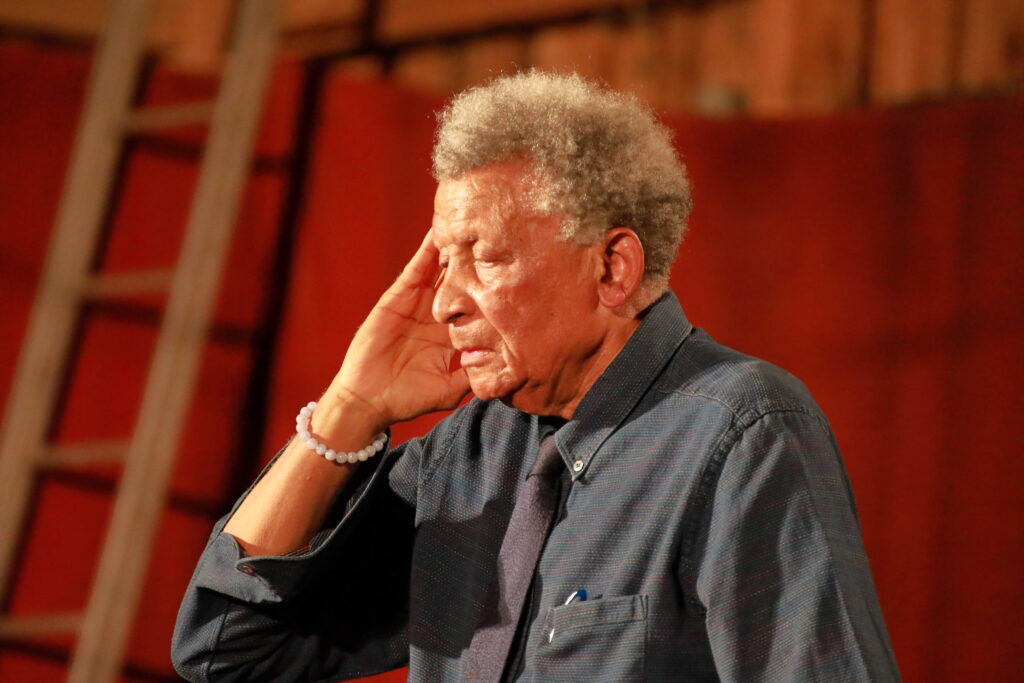
Bild: Abdullah Ibrahim, 2019 – Foto: Schorle, https://commons.wikimedia.org/wiki/User:Schorle – Lizenz: https://creativecommons.org/licenses/by-sa/4.0/deed.en – Datei: https://commons.wikimedia.org/wiki/File:Abdullah_Ibrahim_INNt%C3%B6ne_08.jpg
Seine Musik gab Nelson Mandela in der Haft neuen Lebensmut
Ibrahims Schaffen war zu weiten Teilen auch Reflexion zu den politischen Entwicklungen in seinem Heimatland. Songtitel wie »Soweto« oder Albumtitel wie »Cape Town Flower« waren Selbstversicherung für die rassistisch unterdrückten Schwarzen in Südafrika – und brachten zugleich den Kampf gegen die Apartheid einem großen internationalen Jazzpublikum nahe.
cbu
Ein lyrischer Minimalist aus Kapstadt
Sein Stil am Piano war sparsam, er war hörbar vom lyrischen Minimalismus eines Thelonious Monk geprägt, genauso kamen lokale südafrikanische Idiome zur Geltung. 1974, bei einem Besuch in der Heimat, komponierte er „Mannenberg“, eine Suite über die Zwangsumsiedlung von Bewohnern einer Township, das sich später zur Hymne der Antiapartheidbewegung entwickelte.
In den späten 1970ern und 80ern lebte Dollar Brand zeitweilig in München und nahm hochgelobte Alben auf. Obwohl ihn Nelson Mandela 1990 dazu brachte, nach Südafrika zurückzukehren und zu Ehren von dessen Amtseinführung zu spielen, blieb Dollar Brand Bayern immer eng verbunden. Seinen Lebensabend verbrachte der Pianist am Chiemsee, wo er hochbetagt im Alter von 91 Jahren nach einem langen, steinigen, aber auch enorm reichen Künstlerleben Anfang Juni gestorben ist.
Julian Weber
https://taz.de/Jazzpianist-Abdullah-Ibrahim-ist-tot/!6187967
Was er unter politischem Gospel verstand
Für Abdullah Ibrahim war das Konzert-Piano ebenso afrikanisch, wie es das Daumenklavier für seine Vorfahren war. Der Jazzpianist amalgamierte eine Vielzahl musikalischer Elemente zu einem enzyklopädischen Stil und setzte sich gegen Rassismus ein.
Peter Kemper
Mandelas Mozart
Von Kapstadt über New York nach Prien am Chiemsee: Das Leben des großen Jazz-Pianisten Abdullah Ibrahim war eine Reise – und er schaffte es, immer am exakt richtigen Ort zu sein.
Joachim Hentschel
https://www.sueddeutsche.de/kultur/abdullah-ibrahim-tot-jazz-nachruf-jazz-li.3499587?reduced=true
«Meine Heimat ist die Menschheit»
Ein Klavier. Allein. Wenige Töne. Aber viel Aura. So kann und so konnte man ihn in seinen letzten Jahren oft erleben: den Pianisten und Komponisten Abdullah Ibrahim. In Solo-Auftritten durchwanderte der Musiker gern auf den Tasten Stationen seines Lebens – und zwar ohne Zwischenstopp. Besonders häufig tat er das zuletzt unter dem heimeligen Gebälk eines Veranstaltungssaals in Bayern, genauer: im Chiemgau. Denn in dieser Region hatte der Musiker eine Heimat und einen festen Wohnsitz gefunden. Mehrere Solo-Heimspiele nacheinander gab er in einem kleinen Ort mitten zwischen grünen Hügeln unweit des Chiemsees. Und viele seiner Fans pilgerten hin. Ein Jazz-Weltstar in einem großen bayerischen Hauskonzert: Das wollten sich viele nicht entgehen lassen.
Roland Spiegel
Er war ein großer Weiser des Jazz
„Bach? Beethoven? Brand plays better“, meinte der südafrikanische Bürgerrechtskämpfer und spätere Präsident Nelson Mandela einmal, als er zur Musik von Abdullah Ibrahim befragt wurde. Der aus Kapstadt gebürtige Pianist quittierte dieses Aperçu mit einem bescheidenen „Nett, aber ein bisschen übertrieben.“
Samir H. Köck
https://www.diepresse.com/30713406/er-war-ein-grosser-weiser-des-jazz-abdullah-ibrahim-ist-tot
Mit «Mannenberg» schrieb der als Dollar Brand bekannt gewordene Pianist Musikgeschichte
Am Anfang stand Duke Ellingtons «Take the A Train». Die Erkennungsmelodie der berühmten Big Band hatte den Weg nach Südafrika gefunden. In einem bescheidenen Wohnzimmer von Kensington, einem berüchtigten Slumviertel Kapstadts, erweckte sie einen eigenartigen, in sich gekehrten Jungen, der meist am Klavier sass und sich an klassischen Etüden abarbeitete. Dank Ellington entdeckte er plötzlich eine neue musikalische Welt.
Stefan Hentz
Abdullah Ibrahim – der Heiler mit 88 Tasten
Er ist überzeugt: Musik ist kein Vehikel zur Selbstdarstellung, sondern ein Mittel, um Menschen zu erreichen – und zu heilen.
Mit japanischer Kampfkunst hält Abdullah Ibrahim seinen Körper bis ins hohe Alter fit, was ihm auch seine lange Bühnenkarriere ermöglicht.
Insbesondere das Solospielen bleibt bis zum Ende von Abdullah Ibrahims Karriere zentral. Sein gepflegter Tastenanschlag und die in sich ruhende Art zu improvisieren berühren und begeistern ein grosses Publikum, das ihm bis zuletzt treu bleibt.
Roman Hošek
Audios / Videos:
Dollar Brand (Abdullah Ibrahim) – Mannenberg ~ ‚Is Where It’s Happening‘
Abdullah Ibrahim – Mannenberg (1987)
Abdullah Ibrahim – Mannenberg, 2007
Abdullah Ibrahim: Tiny Desk (Home) Concert, 2022
NEA Jazz Masters: Abdullah Ibrahim (2019)
Abdullah Ibrahim – Ishmael, 2013
Krotoa – Crystal Clear, 2024
Abdullah Ibrahim – The Wedding (Solotude), 2021
EXCLUSIVE: Distinguished pianist and composer Abdullah Ibrahim returns to play in SA after 5 years, 2024
Perspectives – Abdullah Ibrahim July 13th
Mehr:
https://www.discogs.com/de/artist/338287-Dollar-Brand?redirected=true
https://www.allmusic.com/album/ancient-africa-mw0000174922
https://www.imdb.com/de/name/nm0104456
https://africasacountry.com/tag/abdullah-ibrahim
http://www.music.org.za/artist.asp?id=83
https://sahistory.org.za/article/abdullah-ibrahim-and-politics-jazz-south-africa
https://www.thenationalnews.com/arts-culture/music/key-note-speaker-1.555453
https://downbeat.com/archives/artist/abdullah-ibrahim
https://downbeat.com/news/detail/abdullah-ibrahim-focus-the-balance
https://www.theguardian.com/music/2001/dec/08/jazz
https://www.bbc.co.uk/radio3/jazz/profiles/abdullah_ibrahim.shtml
https://en.wikipedia.org/wiki/Abdullah_Ibrahim
(*) https://de.wikipedia.org/wiki/Abdullah_Ibrahim
Auf ch-cultura.ch u.a. erschienen:
#AbdullahIbrahim #DollarBrand #CHcultura @CHculturaCH ∆cultura cultura+




.jpg)
.jpg)

Kommentare von Daniel Leutenegger