
Die am 30. Juli 1926 in Los Angeles geborene US-amerikanische Künstlerin Betye Saar (Bild) ist am 26. Juli 2026 ebenda gestorben. Sie war international für ihre Arbeiten mit der Technik der Assemblage bekannt. In den USA war Saar eine Legende in der Welt der zeitgenössischen Kunst. Sie war eine visuelle Erzählerin und versierte Grafikerin. In den 1970er-Jahren zählte sie zu den Vertreter:innen des Black Arts Movement. Sie thematisierte von Anfang an die negativen Darstellungen von Afro-Amerikanern:innen und die in den USA weitverbreitete rassistische Haltung gegenüber schwarzen Menschen. 2021 wurde Betye Saar in die renommierte American Academy of Arts and Letters aufgenommen. (*)

Bild: Betye Saar, 1989 – Foto: Lezley Saar – Lizenz: Public domain – Datei: https://commons.wikimedia.org/wiki/File:Portrait_of_Betye_Saar
Betye Saar, Leading Figure Of The Black Arts Movement, Dieas At 99
Pathbreaking artist Betye Saar, whose powerful assemblages of racist memorabilia served up scorching commentary on the condition of the Black American—particularly the Black American woman—died on July 26 in Los Angeles. She was ninety-nine. Saar’s longtime gallerist Julia Roberts, of Roberts Projects, confirmed her death, which occurred at home, in the artist’s sleep, four days shy of her hundredth birthday.
https://www.artforum.com/news/betye-saar-dies-at-99-1234755759/
Betye Saar, Who Turned Black Stereotypes Into Symbols of Resistance, Dies at 99
Over her seven-decade career, the artist transformed everyday objects into potent meditations on race, memory, and spirituality.
Following the assassination of Martin Luther King Jr., Saar’s work grew more political. In 1972, she responded to an open call for a show of art inspired by Black superheroes at the Rainbow Sign in Berkeley with her most famous piece, The Liberation of Aunt Jemima. This provocative assemblage centers on a pencil and notebook holder in the shape of the “mammy” character which pervaded American marketing. By sticking a rifle in the figurine’s hand and a politically potent collage atop her skirt, Saar transformed this former object of ridicule into a grinning menace against prejudice.
Vittoria Benzine
https://news.artnet.com/art-world/betye-saar-obituary-2791286
Artist Betye Saar dies at 99
She continued working into her late 90s, including a commissioned installation at the Huntington Library’s gardens, made at 96 and now on view as “Betye Saar: Drifting Toward Twilight” through November 2027. “Even in death those things can be really beautiful,” she said of the installation in an accompanying documentary. Two other shows remain on view during her centennial year: “Let’s Get It On: The Wearable Art of Betye Saar” at Roberts Projects, in Los Angeles, through August 22, and “Betye Saar’s Black Dolls” at the New York Historical Society, through October 4. Her works are currently included in “Tarot! Renaissance Symbols, Modern Visions” at the Morgan Library & Museum.
Katie White
https://www.artsy.net/article/artsy-editorial-artist-betye-saar-dies-99
Betye Saar, influential assemblage artist who ‘liberated’ Aunt Jemima, dies at 99
Betye Saar, the pioneering Los Angeles assemblage artist who transformed racist memorabilia into searing meditations on slavery, Jim Crow and Black spirituality, died in her sleep at 99, days before her centennial.
Her landmark 1972 assemblage “The Liberation of Aunt Jemima,” arming a mammy figure with rifle and grenade, jolted the Black Arts Movement and helped spur the Black women’s movement.
From Watts and Laurel Canyon to museums in New York and Milan, Saar’s globe-spanning practice, family collaborations and late-career installations cemented her legacy as a restless, radical voice in contemporary art.
Carolina A. Miranda
Betye Saar, Artist Who Upended Black Stereotypes, Dies at 99
Working with dolls, family photographs, fabric scraps and other found objects, she became a leading figure in assemblage art.
Betye Saar, the groundbreaking California assemblage artist who confronted stereotypes about Black women through her dreamy memento boxes as well as her arresting images of Aunt Jemima armed with rifles and other weapons, died on Sunday at her home in Los Angeles.
Hannah Gottlieb-Graham, a publicist for Roberts Projects in Los Angeles, the gallery that represented Ms. Saar, confirmed the death. Assemblage refers to sculpture made from found objects, and Ms. Saar was a leading practitioner in California starting in the 1960s and ’70s, along with George Herms, Edward and Nancy Kienholz, John Outterbridge and Noah Purifoy.
More than her male counterparts, Ms. Saar was known for incorporating into her work delicate fabrics associated with domestic life, strong images of the Black female body and a heavy dose of spirituality. Her most celebrated pieces from the 1970s served to confront and complicate stereotypes of Black people that were embodied in minstrel characters or figures of Black “mammies,” the women hired to care for white children.
Jori Finkel
https://www.nytimes.com/2026/07/27/arts/design/betye-saar-dead.html#gateway-content
Betye Saar, artist who shattered stereotypes of Black women, dies at 99
She achieved art world stardom at 93, when she had simultaneous solo exhibitions in New York and California.
Betye Saar, who scoured flea markets for ordinary items — clocks and window frames, plastic dolls, miniature ships and masks — from which she crafted works of art that explored and exploded images of Black women in America, died Sunday in Los Angeles. (…)
Ms. Saar, a lifelong Californian, was 93 when she became an art world star in 2019. That year, the Museum of Modern Art in New York and the Los Angeles County Museum of Art mounted simultaneous exhibitions of her work. Reviewing the Los Angeles show in The Washington Post, art critic Sebastian Smee wrote that her “modestly scaled assemblages address racism and female labor with excoriating intensity and moody finesse. But they also vibrate with spiritual yearning.”
Fred A. Bernstein
Artist Betye Saar, who used repurposed objects to reclaim identity, has died at 99
Her 1972 mixed media artwork «The Liberation of Aunt Jemima» forcefully invokes the worn Black «mammy» tropes of movies, TV shows and ad campaigns. It centers on a grinning «mammy» figure wearing a knotted headscarf and a loud floral dress. Posing against a wall of repeating vintage Aunt Jemima pancake mix labels, she holds a broom in one hand and a rifle in the other.
Chloe Veltman
https://www.npr.org/2026/07/28/nx-s1-5910539/betye-saar-dead
Leading assemblage artist was known for reclaiming Jim Crow-era memorabilia as images of Black liberation
Artist Betye Saar, the pioneering figure of the Black arts movement, died on Sunday morning in her home town of Los Angeles.
Saar, a famous practitioner of assemblage, an artistic style that builds sculpture from everyday objects, was best known for reclaiming Jim Crow era memorabilia such as dolls and washboards and recasting them as images of Black liberation. Saar also worked in genres including printmaking and film, exploring themes from family to spirituality.
“Her symbolically rich body of work has evolved over time to demonstrate the environmental, cultural, political, racial, technological, economic, and historical context in which it exists,” according to Roberts Projects, the Los Angeles gallery that represents her.
Roque Planas
https://www.theguardian.com/artanddesign/2026/jul/27/betye-saar-death
Una de las impulsoras del movimiento artístico de la mujer afroamericana
Era una de las figuras más influyentes del arte contemporáneo y reconocida por transformar objetos cotidianos en potentes denuncias contra el racismo. La artista estadounidense Betye Saar ha fallecido este lunes a los 99 años en Los Ángeles, apenas unos días antes de cumplir 100 años.
La noticia ha sido confirmada por su galerista, Julie Roberts, quien ha explicado que Saar murió mientras dormía. En un comunicado, Roberts ha destacado que la creadora «será recordada por una obra que exploró con gran profundidad la identidad afroamericana, la espiritualidad y las intersecciones entre diversas culturas».
https://www.rtve.es/noticias/20260728/muere-betye-saar-arte-racismo-estados-unidos/17171211.shtml
È morta a 99 anni Betye Saar, pioniera dell’arte afroamericana e femminista
È morta Betye Saar, tra le maggiori artiste americane del secondo Novecento e protagonista della stagione del Black Arts Movement: i suoi assemblage come linguaggio di critica delle narrazioni dominanti.
Mort à 99 ans de Betye Saar, grande figure de l’art afro-américain
Célèbre pour ses assemblages, figure incontournable du Black Arts Movement, l’artiste afro-américaine Betye Saar a transformé les rebuts de l’Amérique en œuvres libératrices pour les noirs.
Clémentine Mercier
Betye Saar, pionnière de l’art afro-américain et figure du Black Arts Movement, est morte à 99 ans
Enseignante à partir des années 1980, elle a influencé plusieurs générations d’artistes, dont sa fille, la sculptrice Alison Saar. Bien que tardives, de grandes rétrospectives au Los Angeles County Museum of Art et au MoMA de New York, en 2019–2020, l’ont finalement consacrée.
Joséphine Bindé
Betye Saar, figure tutélaire de l’art afro-américain, est morte
Connue pour ses œuvres d’assemblages comme pour ses engagements politiques, la Calfornienne s’est éteinte dimanche 26 juillet, à Los Angeles, à quatre jours de son 100ᵉ anniversaire.
Philippe Dagen
Eine der wichtigsten Stimmen der afroamerikanischen Gegenwartskunst
In Deutschland wurde Saar 2019 mit dem Wolfgang-Hahn-Preis der Gesellschaft für Moderne Kunst am Museum Ludwig ausgezeichnet. Die Jury betonte damals, es sei an der Zeit, die hierzulande lange unterschätzte Künstlerin zu würdigen. Mit dem Preis erwarb das Museum Ludwig Werke Saars für seine Sammlung.
Noch im hohen Alter war Saar international präsent: Das New Yorker Museum of Modern Art zeigte ihre Arbeiten ebenso wie das Los Angeles County Museum of Art. Ihr Werk beeinflusste Generationen jüngerer Künstlerinnen und Künstler und machte sie zu einer Schlüsselfigur der zeitgenössischen Kunst.
https://www.monopol-magazin.de/us-kuenstlerin-betye-saar-gestorben
Sie hat über all die Jahre an ihrem Glauben festgehalten, «dass Kunst unsere finstersten Momente und tiefsten Ängste überwinden kann»
Die US-amerikanische Künstlerin Betye Saar, die seit den 1960er-Jahren ikonische Werke zu Schwarzer Identität und Kultur schuf, verstarb im Alter von 99 Jahren in Los Angeles. Bekannt geworden für ihre Assemblage-Arbeiten, zählt sie zu bedeutendensten Vertreter:innen der Black Arts Movement. Sie wandte sich insbesondere gegen negative Darstellungen von Afro-Amerikaner:innen und Rassismus in den USA und auf der Welt.
Ihre Kunst machte aus Fundstücken Widerstand
Die fast Hundertjährige, die aus dem Malereifenster stieg und etwas ganz Neues erfand: In ihren Assemblagen verband Betye Saar die Traumata schwarzer Frauen mit Bildern der Selbstermächtigung.
Stefan Trinks
Hochpolitische Zusammenstellungen
Für ihre bekannteste Arbeit, „The Liberation of Aunt Jemima“, benutzte die Künstlerin Betye Saar 1972 die Werbefigur einer US-amerikanischen Frühstücksflockenmarke als Ausgangspunkt: eine stereotyp inszenierte afroamerikanische „Mammy“-Figur, die zum Kauf von Pfannkuchenmehl und Waffel-Sirup verführen sollte. In Saars Assemblage, zusammengebastelt aus einem Notizbuchhalter und weiterem Alltagsmaterial, verwandelt sich die rassistische Karikatur in eine Befreiungskämpferin: Aunt Jemimas Lächeln ist zu einer grotesken Grimasse verzogen, in der einen Hand hält die Figur einen Besen, mit der anderen stützt sie sich auf ein Gewehr, unterm Arm geklemmt ist der Abzugsring einer Handgranate erkennbar.
Beate Scheder
https://taz.de/US-Kuenstlerin-Betye-Saar-ist-tot/!6199691
Betye Saar gilt als wegweisende Künstlerin der Black-Power-Bewegung
Die Bürgerrechtlerin Angela Davis soll sich unter anderem vom aufwühlenden Werk Betye Saars zu ihrem Engagement in der Black-Power-Bewegung inspiriert gefühlt haben. Und auch heute noch ist die 1926 geborene US-amerikanische Künstlerin Inspirationsquelle für eine junge Generation von Künstlerinnen und Künstlern bei ihrer Auseinandersetzung mit Schwarzer Identität und Rassismus.
Brigit Rieger
Videos:
Private View: Betye Saar
Celebrating the radical California assemblage artist and key figure of the Black Arts Movement through the spirit and humanity that animated her practice and private world, 7:00 min
http://amp.nowness.com/story/betye-saar-drifting-toward-twilight
Betye Saar: Taking Care of Business | Art + Film, Christine Turner, 2024, 8:18 min
Nearly 100 years of art making – the remarkable story Betye Saar, Christopher West, 2024, 8.11 min
Assemblage artist Betye Saar, CBS Sunday Morning, 2020, 5:09 min
Betye Saar Oral History, Getty Research Institute, 2011, 1:25:28
Betye Saar: Drifting Toward Twilight, The Huntington, 2023, 16:30 min
Mehr:
https://www.robertsprojectsla.com/artists/betye-saar
https://www.imdb.com/de/name/nm4715189
https://www.discogs.com/de/artist/1937957-Betye-Saar
https://americanart.si.edu/artist/betye-saar-6576
https://www.britannica.com/biography/Betye-Saar
https://www.britannica.com/biography/Betye-Saar
https://art-now-and-then.blogspot.com/2015/09/betye-saar.html
https://hammer.ucla.edu/now-dig-this/artists/betye-saar
https://www.artsy.net/artwork/betye-saar-record-for-hattie
https://www.npr.org/2006/12/28/6688207/life-is-a-collage-for-artist-betye-saar
https://www.kunstmuseumluzern.ch/ausstellungen/betye-saar/
https://shop.kunstmuseumluzern.ch/produkt/publikationen/betye-saar-serious-moonlight/
https://shop.kunstmuseumluzern.ch/produkt/publikationen/betye-saar-serious-moonlight
https://en.wikipedia.org/wiki/Betye_Saar
(*) https://de.wikipedia.org/wiki/Betye_Saar

Bilder: Ausstellungsansichten «Betye Saar. Serious Moonlight», Kunstmuseum Luzern, 2023 – Fotos: Marc Latzel
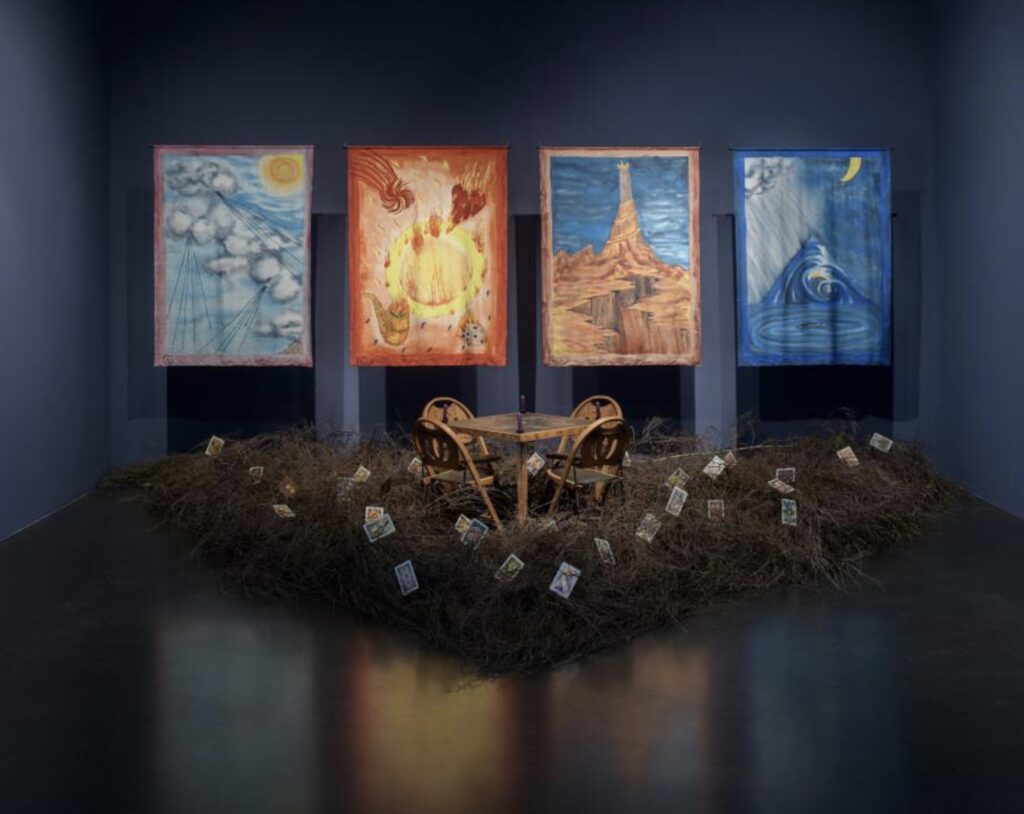
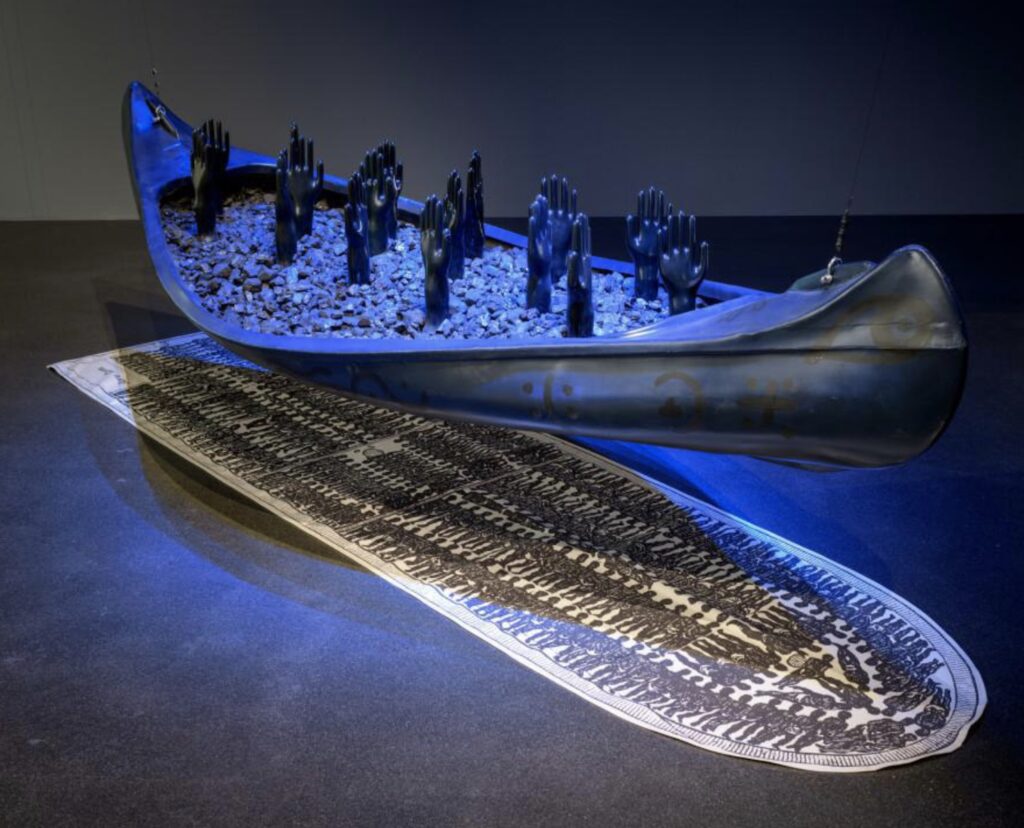
Bilder: Ausstellungsansichten «Betye Saar. Serious Moonlight», Kunstmuseum Luzern, 2023 – Fotos: Marc Latzel
#BetyeSaar #CHcultura @CHculturaCH ∆cultura cultura+







Kommentare von Daniel Leutenegger